


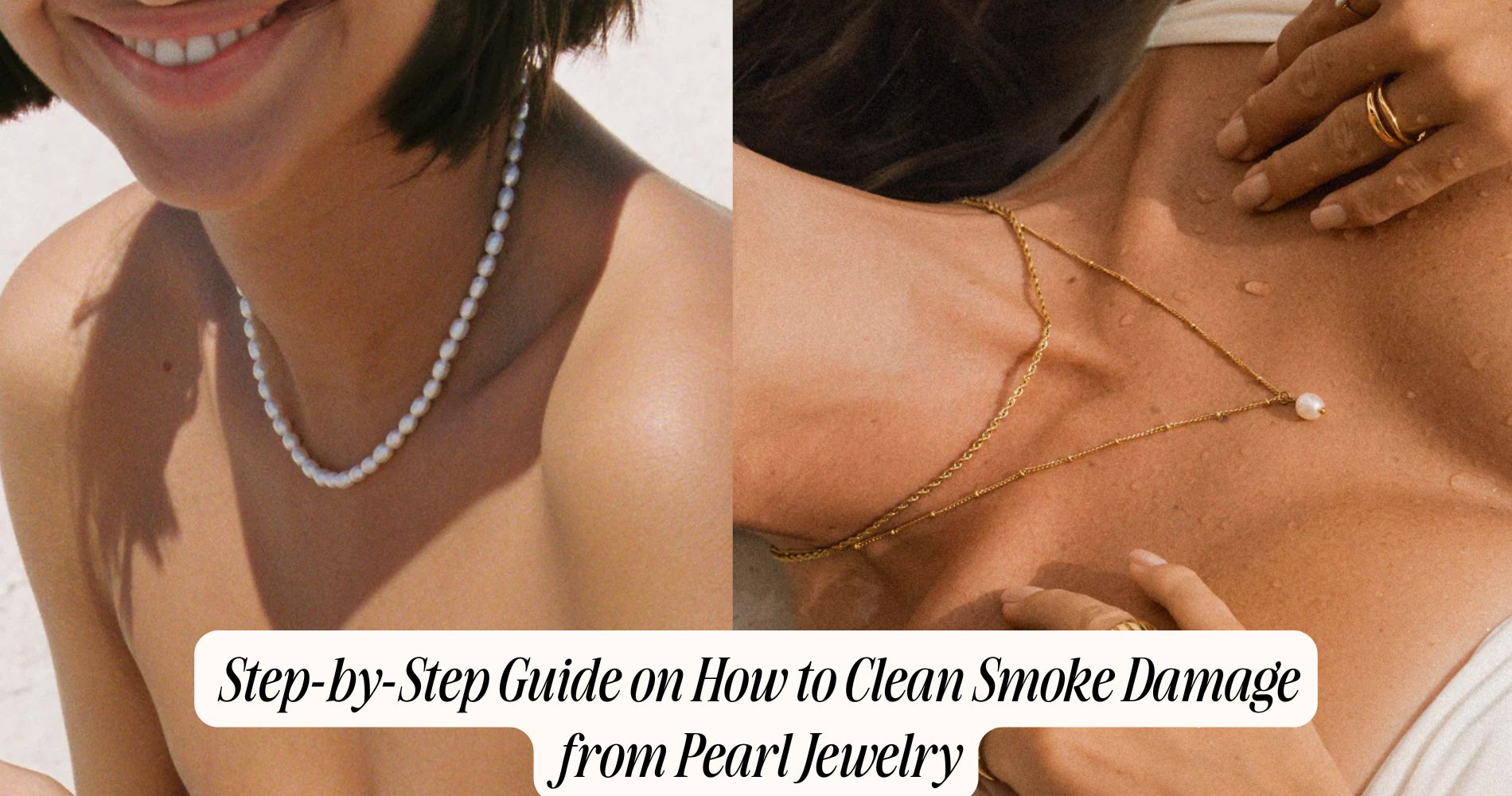
Step-By-Step Guide on How to Clean Smoke Damage From Pearl Jewelry
If you’re wondering how to clean smoke damage from pearl jewelry, start by checking each pearl’s luster and any yellowing under neutral light. Work over a soft towel while wearing nitrile gloves to avoid adding oils. Gently lift soot with a cosmetic fan brush, followed by a kneaded rubber or smoke sponge. Mix lukewarm distilled water with a drop of pH-neutral detergent, lightly agitate the pearl’s surface (never soak, and avoid ultrasonics or abrasives), then rinse with distilled water. Lay the piece flat to dry, turning it often. For delicate pieces like those in our Pearl Drop Necklace Collection, this method helps preserve their natural shine. Next, you’ll learn how to address lingering odors and deeper smoke damage.
Understanding How Smoke Affects Pearl Jewelry
Few materials react to smoke as sensitively as nacre, the biogenic calcium carbonate that gives pearls their luster, and understanding that interaction is essential before you attempt any cleaning.
You’re dealing with a microcrystalline structure bound by organic matrix; both respond aggressively to acidic and resinous byproducts in typical smoke composition.
Combustion releases polycyclic aromatic hydrocarbons, soot, and trace acids that adsorb onto nacreous platelets, dulling refraction and altering surface energy. This raises pearl vulnerability to abrasion and moisture-driven etching.
Tar fractions can migrate into micro-fissures, creating uneven discoloration and localized dehydration of the organic matrix.

Because nacre’s surface is slightly porous and comparatively soft (around 2.5–4 on Mohs), even mild smoke exposure can destabilize finishes, degrade overtones, and weaken strand integrity.
Identifying the Type and Extent of Smoke Damage
Before you attempt any remediation, you need to distinguish superficial smoke deposition from structural nacre degradation and strand compromise.
Begin your damage assessment under neutral, diffuse lighting. Note the event and likely smoke sources: protein-based (house fires), lipid-based (kitchen), or nicotine/tar (tobacco), as each leaves distinct residues and acidity.
Inspect luster first. If pearls appear only dulled or slightly yellowed but remain smooth, you’re likely dealing with surface contamination.
Use a 10x loupe to check for micro-pitting, chalky areas, or iridescence loss, which indicate nacre erosion.
Examine drill holes and the thread path for darkened channels, fraying, or stiffness—signs of strand damage and absorbed contaminants.
Finally, compare affected pearls to an uncontaminated reference strand to quantify extent.
Gathering Gentle Cleaning Supplies Safe for Pearls
Once you’ve confirmed the type and extent of smoke impact, you need materials that won’t abrade nacre, swell silk threads, or drive residues deeper into micro-fissures.
Select pH‑neutral, fragrance‑free gentle detergents—typically baby shampoo or a lab-grade neutral soap—avoiding anything labeled degreaser, brightener, or antibacterial.
As primary cleaning tools, assemble soft, non-abrasive implements: lint-free microfiber cloths, tightly woven cotton pads, and ultra-soft cosmetic brushes reserved only for jewelry.
Add distilled water to prevent mineral deposition, plus small glass bowls for solution mixing. Have non-powdered nitrile gloves to keep skin oils off compromised surfaces.
Exclude ultrasonic cleaners, steamers, baking soda, and toothpaste; these aggressively attack nacre layers and can exacerbate smoke-induced crazing or discoloration along drill holes and stringing pathways.
Preparing Your Workspace and Inspecting Each Piece
Design a controlled, non-reactive workspace that lets you assess and handle smoke‑affected pearls without introducing new contaminants.
For ideal workspace setup, use a stable, padded surface covered with a clean, white, lint‑free cloth to reveal soot, discoloration, and nacre loss.
Guarantee neutral lighting (5,000–6,500K) so you can read subtle surface changes accurately.

Create a structured inspection checklist. Include:
- pearl type and size;
- mounting style;
- thread condition;
- clasp integrity;
- presence of visible soot in drill holes and behind settings;
- nacre thickness and continuity;
- pre‑existing scratches, pits, or chalky areas;
- odor intensity;
- and any heat distortion to metal components.
Use a 10x loupe and non‑marring tweezers to document each piece individually before you proceed to any form of residue removal.
Dry Cleaning: Removing Loose Soot and Surface Residue
Some of the most critical smoke removal happens before you ever introduce moisture, using controlled dry techniques to lift loose soot without abrading the nacre.
Begin with a clean, dry, cosmetic‑grade fan brush or sable artist’s brush. Working over a microfiber pad, use feather‑light strokes to dislodge surface particles, rotating each piece so gravity carries debris away from drill holes and crevices.
For strand jewelry, support the thread with one hand while you brush with the other to prevent tension on weakened silk. Avoid canned air; its pressure can drive soot into microfissures.
If residue persists, employ specialized dry cleaning techniques: gently tamp a kneaded vulcanized rubber or smoke sponge around, not across, each pearl to achieve additional soot removal without scratching.
Wet Cleaning: Safely Washing Smoke-Damaged Pearls
Although pearls are notoriously sensitive to moisture and chemicals, controlled wet cleaning is essential for dissolving the oily smoke films and acidic residues that dry methods can’t remove.
For maximum pearl safety, prepare a basin with distilled, lukewarm water and add a single drop of pH‑neutral, dye‑free liquid soap. Don’t use household detergents, ammonia, or ultrasonic systems; they attack nacre.
Detach pendants or earrings from metal components when possible. For strands, verify the silk or nylon thread isn’t frayed before wet cleaning.
Gently immerse the pearls briefly—no soaking. Using a new, ultra-soft cosmetic brush, lightly agitate each pearl’s surface, working along drill holes where smoke residues concentrate. Keep movements linear, not circular, to minimize micro-abrasion of the nacre layers.
Drying, Buffing, and Restoring Pearl Luster
Once you’ve completed wet cleaning, controlled drying is critical to prevent stress cracks, thread shrinkage, and dulling of the nacre.
Lay strands flat on a clean, white cotton towel, supporting their full length so gravity doesn’t stress stretched silk. Use passive drying methods only—no hairdryers, sunlight, or proximity to heaters, which can dehydrate nacre layers and embrittle stringing material.
Turn the pearls every 15–20 minutes for even evaporation, replacing any damp toweling. Once fully dry, evaluate surface sheen under neutral, indirect light.
To restore luster, use conservative buffing techniques: gently roll each pearl between layers of tightly woven, lint‑free microfiber, following the drill hole axis.
Don’t use abrasive compounds or polishing cloths designed for metals; they’ll microscratch nacre.
Addressing Persistent Odors and Stains on Pearls
With surface grime removed and luster stabilized, you can address smoke‑related residues that remain embedded in nacre pores and stringing fibers, which often present as yellow‑gray discoloration and a persistent tobacco or soot odor.
For targeted stain treatment, examine each pearl under neutral, diffuse light. Note localized dark halos near drill holes and along knots; these indicate deeper tar absorption.
For odor removal, place the fully dried strand in a ventilated container with a physical barrier between the pearls and an odor‑neutralizing medium such as activated charcoal or zeolite granules.
Don’t allow direct contact, which can abrade nacre. Refresh the medium every 24 hours and reassess. Repeat in short intervals; prolonged exposure isn’t necessary and increases dehydration risk.
Protecting Your Pearls From Future Smoke Exposure
Even after you’ve corrected smoke damage, you need to treat pearls as ongoing “organic composites” that are highly vulnerable to airborne contaminants, especially in enclosed or nicotine‑rich environments.
Implement preventive measures by designating your pearls as “non-smoking-zone” jewelry—don’t wear them in smoking areas, kitchens with heavy frying, or near fireplaces and incense.
Store pieces in inert, lined cases with tight seals that function as passive smoke barriers.

Avoid wooden boxes or untreated cardboard, which can off‑gas acids and absorb odors. Use individual soft pouches to prevent micro‑abrasion of nacre.
If smoke exposure is unavoidable, rotate wearable pieces and shorten wear times.
For high-value strands, consider installing HEPA and activated‑carbon filtration in storage rooms to reduce particulate and volatile organic compound deposition.
Frequently Asked Questions
Can Smoke-Damaged Pearl Jewelry Be Safely Insured or Appraised After Cleaning?
Yes, you can safely insure and appraise cleaned, smoke-damaged pearls if a qualified gemologist documents restoration, notes condition, and issues a written valuation; insurers then determine insurance coverage limits based on that formal appraisal process and supporting photos.
How Does Smoke Exposure Affect the Resale or Heirloom Value of Pearl Jewelry?
Smoke exposure usually lowers resale and heirloom value because microscopic surface etching, discoloration, and odor cause measurable value depreciation. During pearl appraisal, experts scrutinize luster, nacre integrity, and uniformity, often documenting permanent damage that justifies reduced marketability and insurance valuations.
Should I Inform My Jeweler or Insurer About Past Smoke Damage to Pearls?
Yes, you should disclose prior smoke damage. Full transparency lets your jeweler assess viable jewelry restoration methods and document condition. It also supports accurate valuations, prevents coverage disputes, and strengthens any future insurance claims involving those affected pearl pieces.
Can Ultrasonic or Steam Cleaners Ever Be Used on Smoke-Damaged Pearl Strands?
You should never use ultrasonic or steam cleaners on smoke‑damaged pearl strands. Those aggressive cleaning methods compromise nacre, adhesives, and silk. For proper pearl care, rely on technician‑performed manual cleaning with distilled water, mild detergent, and controlled drying.
What Documentation Should I Keep After Professional Restoration of Smoke-Exposed Pearl Jewelry?
You should retain restoration records, before/after photographs, detailed invoices, jeweler’s technical notes, updated appraisal documents, lab reports on pearl condition, insurance correspondence, and any guarantees or warranties to establish provenance, treatment history, and post-restoration replacement value.
Conclusion
You’ve seen how smoke compromises nacre, silk, and settings, and how controlled, non‑abrasive methods restore integrity and luster. When you methodically assess damage, use only pearl‑safe materials, and avoid ultrasonic or harsh chemicals, you prevent micro‑etching and structural loss. If you’re ever unsure, stop and consult a professional jeweler or conservator. With consistent post‑exposure care and smart storage, you’ll keep your pearls stable, attractive, and performing as designed for decades.












Leave a comment
This site is protected by hCaptcha and the hCaptcha Privacy Policy and Terms of Service apply.