


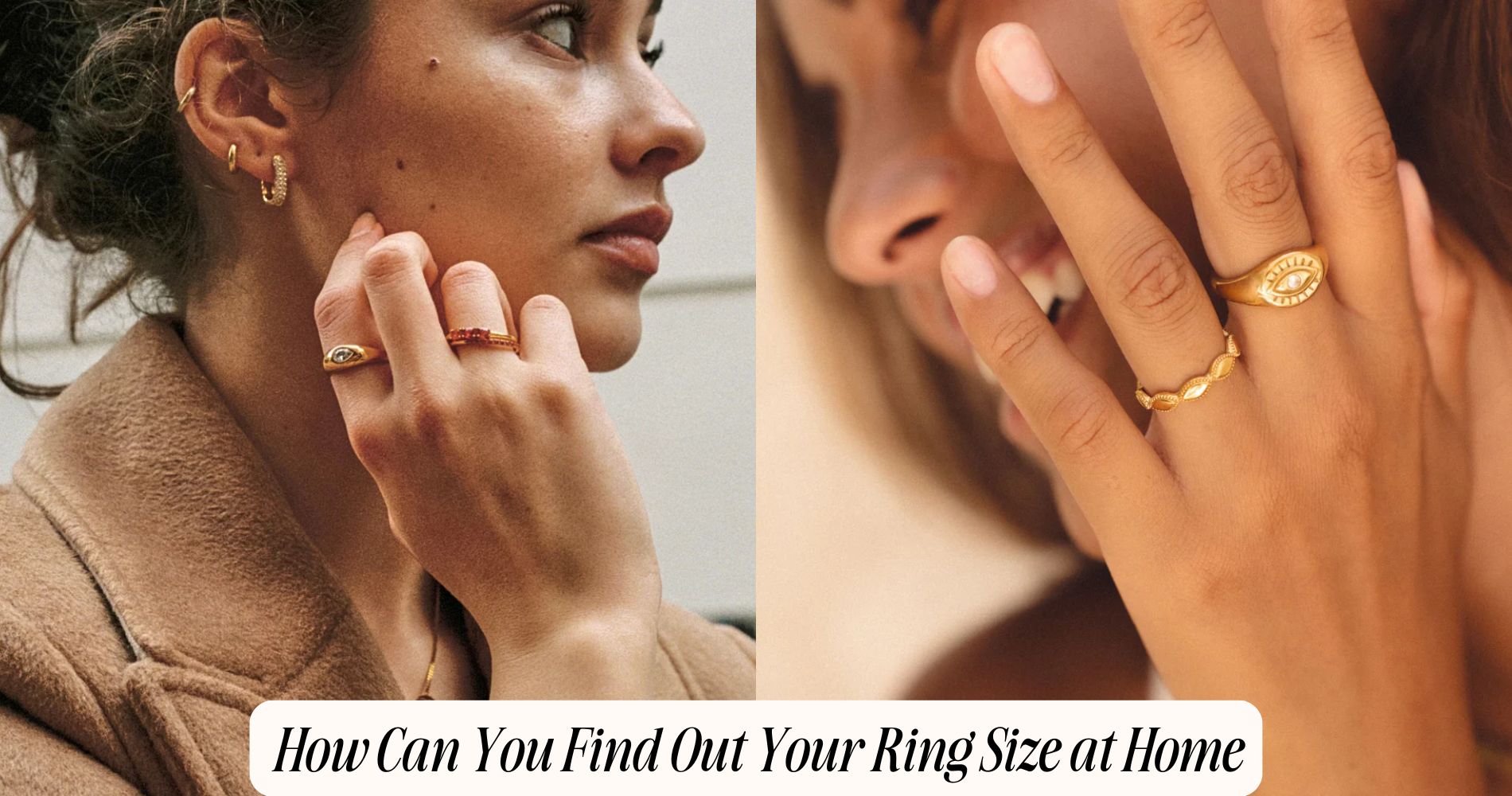
How Can You Find Out Your Ring Size at Home
How can you find out your ring size? Start by wrapping a non-stretch paper strip snugly around the base of your finger, mark where it overlaps, then measure the inner edge in millimeters and convert using a standard ring size chart. Alternatively, measure the inner diameter of a ring that already fits that finger—accurate to 0.1 mm—and convert it to your size. A calibrated printable ring sizer also works well (just be sure to verify the scale). Measure at a stable temperature, ideally mid-day, and repeat for consistency, adjusting for swelling and hand dominance. Getting the fit right is especially important for everyday styles like Waterproof Rings, where comfort and security matter. Next, you’ll see how to validate and fine-tune your measurements for maximum accuracy.
What You’ll Need to Measure Accurately
Before you measure, assemble a narrow strip of non-stretch paper or soft measuring tape, a fine-tip pen, and a rigid ruler with millimeter markings. These measuring tools minimize parallax and flex error, allowing accurate measurements.
Choose a tape with clear 1 mm increments; avoid elastic tapes that distort circumference. Select a pen with a crisp tip to place precise marks. Use a flat, rigid ruler to read millimeters exactly edge-to-edge.
Have a straightedge card for stabilizing the strip on a desk, plus small scissors for clean, square cuts. Keep an anti-slip surface or low-tack tape to prevent drift while marking.
Confirm your hands are dry and at room temperature to reduce swelling variability. Record measurements immediately and verify calibration by comparing your ruler against a known standard.

Method 1: Measure With String or Paper
Although it’s simple, this method demands precision: wrap a non-stretch paper strip snugly around the base of your finger, keeping it perpendicular to the finger’s axis and flush to the skin without compressing tissue. Mark the overlap precisely.
Lay the strip flat and measure the inner edge from start to mark with a millimeter ruler. Repeat three times to validate consistency and average the results.
If you prefer string measurements, use unwaxed, non-stretch thread, pre-tension it gently, and follow the same marking and measuring steps. Discard any reading that deviates more than 0.5 mm.
Convert the averaged circumference to size using a standard ring sizing chart for your region. Measure at room temperature and after normal activity; cold or swelling skews the paper method and string measurements.
Method 2: Use a Ring You Already Own
A known reference makes sizing faster and more precise: use a ring that fits the exact finger you’re measuring.
Verify the ring fit: it should slide over the knuckle with slight resistance and rest comfortably without twisting.
Place the ring on a millimeter ruler and measure the inner diameter at the widest point, edge to edge, without including metal thickness. Record to 0.1 mm.
Convert inner diameter to a standard size chart for your region (US, UK, EU, or ISO circumference).
If you have calipers, measure both axes to detect oval distortion; average them for accuracy.
For size adjustment, note seasonal swelling and dominant-hand variance; adjust by half-size if the ring is consistently tight or loose.
Recheck after midday for stable results.

Method 3: Printable Ring Sizer at Home
Printable precision meets convenience with a calibrated ring sizer you print at home.
Download a PDF from reputable online resources that provide verified printable templates. Before cutting, confirm the scale: the page must include a 100 mm or 1-inch calibration line. Measure that line with a rigid ruler; if it’s off, adjust your printer to “Actual size” or 100% and reprint.
Cut the strip along the indicated path, slit the notch, and feed the tapered end through. Wrap it around the base of your finger, keeping the strip level and snug without compressing tissue. Note the mark where it meets the scale.
Repeat three times, measuring at different times of day to account for swelling. Validate accuracy by matching the printed circle gauges to a flat-set ring you own.
How to Convert Measurements to Ring Sizes
Once you’ve recorded an accurate inner circumference or diameter, convert it to a standardized ring size using a calibrated chart for your region (US/Canada, UK/AU, EU, or ISO).
Use millimeters. For circumference, match your value directly to the size column. For diameter, either reference a diameter column or compute circumference with C = π × D, then consult conversion charts.
Prioritize precision to 0.1 mm.
Select the correct regional system: numeric (US/Canada), alphabetical (UK/AU), ISO circumference codes, or EU metric scales.
When comparing international sizes, cross-reference at least two reputable charts to confirm equivalence, since half-sizes and quarter-sizes don’t always map perfectly.
If your measurement falls between entries, choose the nearest available size in the target system, noting any half-size availability.

Tips to Avoid Common Sizing Mistakes
With your measurement converted to a regional size, prevent errors that lead to poor fit by controlling variables. Measure at a stable body temperature; cold shrinks fingers, heat expands them.
Account for diurnal swelling by measuring at mid-day or early evening. Keep the measuring strip level and perpendicular to the finger; skewed angles inflate circumference. Position it at the intended wearing point, just past the knuckle’s widest area. Maintain snug contact but avoid over tightening; compression yields undersized results.
Identify common sizing errors: using stretchy string, measuring a wet finger, or rounding down.
Consider band width: wider bands require a slightly larger size for equal comfort. Verify knuckle-to-base differential; if your knuckle is considerably larger, opt for a size that passes over it without rotation when worn.
Ways to Double-Check Your Results
Although your initial measurement may look exact, validate it with two independent checks.
Start by repeating the same method at different times of day to capture normal swelling variance; accept only values within 0.25 size.
Next, apply alternative measuring methods: use a calibrated ring sizer set, then a printable sizing strip with a verified scale. Cross-reference inner diameter and inner circumference against a standardized conversion chart; discrepancies over 0.2 mm signal re-measurement.
Employ double checking techniques on fit: the ring (or test loop) should slide over the knuckle with slight resistance and sit without rotational play.
Test with temperature control—hands at room temperature for five minutes—then recheck.
Finally, measure a well-fitting ring’s inner diameter with digital calipers and compare to your finger-derived size.
When to Consider Professional Sizing
If your at-home measurements conflict, your knuckle-to-base proportions are atypical, or your target ring has design constraints, book a professional sizing.
Seek a jeweler when you’re ordering eternity bands, tension settings, wide shanks (6 mm+), or contoured guards; these designs amplify minor errors.
Go in if your fingers swell with heat, medication, or pregnancy—pros simulate variability with calibrated mandrels, ring gauges, and professional tools.
You’ll get expert advice on sizing up for arthritic knuckles, adding sizing beads, or choosing comfort-fit profiles.
Pros also account for metal hardness, inner-shank geometry, and finish, which change perceived tightness.
If you’re converting international sizes, resizing vintage pieces, or balancing stack heights, a professional guarantees tolerance targets are met.
It’s faster, cheaper, and more accurate than remakes.
Frequently Asked Questions
How Do Pregnancy or Weight Changes Affect Ring Size Over Time?
Pregnancy and weight changes alter ring size by shifting fluid balance and soft tissue volume. Pregnancy hormones cause vasodilation and edema; weight fluctuations increase or reduce subcutaneous fat. You’ll notice tighter or looser fit, diurnal swelling, and possible postpartum normalization.
Can Certain Ring Styles Require a Different Size Than Measured?
Yes. Wider bands often need a larger size due to increased finger coverage and compression. Design complexity—thick profiles, comfort-fit interiors, pave settings, or tension mounts—can alter fit. You should test sizers matching ring width and design complexity.
How Does Climate or Humidity Influence Finger Size Daily?
Climate and humidity influence finger size by causing vascular and tissue volume shifts. Temperature variations induce vasodilation or constriction; humidity effects alter sweat and interstitial fluid retention. You’ll swell in heat and humidity, shrink in cold, fluctuating millimeters throughout days.
Are Adjustable or Comfort-Fit Bands Sized Differently?
Yes. You size adjustable bands to your largest comfortable circumference; they flex to accommodate variance. You size comfort fit slightly smaller than standard, accounting for the domed interior’s reduced contact area and lower friction that eases over-knuckle passage.
What’s the Best Time of Day to Measure for Consistent Results?
Measure in late afternoon or early evening for stability. Morning measurement skews small due to overnight dehydration; evening measurement can swell from heat or activity. Sit, hands at heart level, room ~70°F, hydrated, repeat on separate days for consistency.
Conclusion
You’ve got all the tools to size your ring finger accurately at home. Use string, paper, a known ring, or a printable sizer, then convert the measurement using a reliable chart. Measure at day’s end, account for knuckle size, and repeat for consistency. Cross-check with multiple methods and materials. If results conflict, size up for comfort. For valuable pieces, complex settings, or fluctuating finger sizes, schedule a professional sizing to eliminate guesswork and guarantee long-term fit and wearability.





Leave a comment
This site is protected by hCaptcha and the hCaptcha Privacy Policy and Terms of Service apply.