

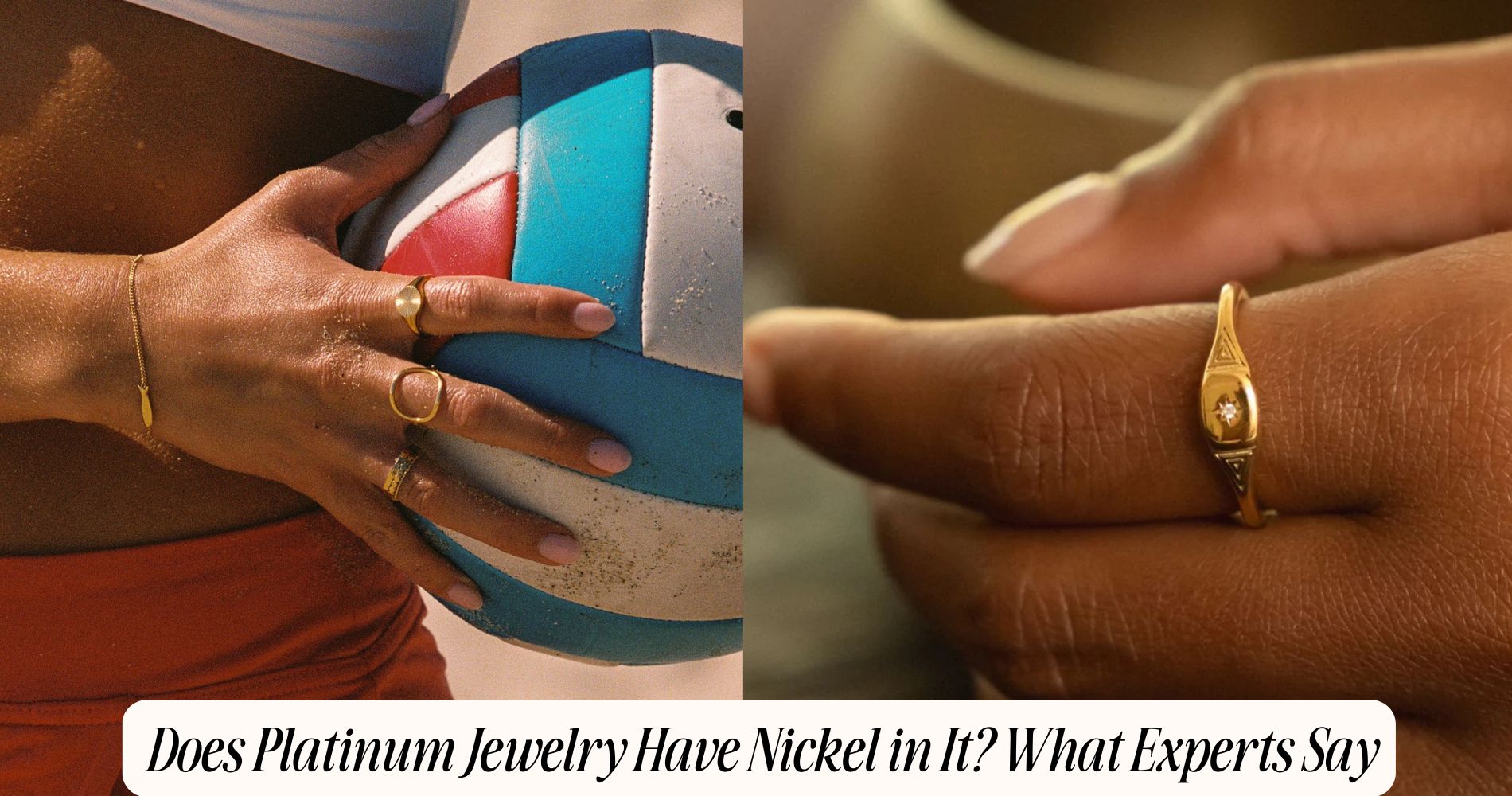
Does Platinum Jewelry Have Nickel in It? What Experts Say
If you’ve ever wondered does platinum jewelry have nickel in it, the answer depends on the purity. High-purity platinum pieces (marked PLAT, PT950, or 950) are typically nickel-free and gentle on sensitive skin. Because platinum is naturally white, it doesn’t require nickel or rhodium plating the way many white gold alloys do. Still, some lower-purity platinum blends or hidden components—like white gold earring backs or certain repair solders—may contain nickel and cause irritation. That’s why it’s important to check alloy details, hallmarks, and documentation so you can choose the safest option for your skin, especially if you prefer dependable everyday pieces like those found in Atolea’s waterproof jewelry collection.
What Makes Platinum Different From Other White Metals
Among white metals, platinum stands out because it’s naturally white, dense, and hypoallergenic, without relying on plating or high nickel content for its color or hardness.

When you evaluate platinum characteristics clinically, you’re looking at a high‑purity metal (often around 95% platinum) with stable surface chemistry and minimal allergenicity.
In metal comparisons, white gold typically contains nickel or other whitening alloys and requires rhodium plating to maintain its color.
That plating can wear, exposing more reactive metals underneath.
By contrast, platinum’s color is intrinsic; it doesn’t fade to yellow or need routine replating.
It also deforms rather than chips, so you usually lose less metal during wear, which helps keep gemstones more securely seated over time.
How Platinum Alloys Are Formulated in Modern Jewelry
When you look at platinum jewelry from a clinical, materials‑science perspective, you’re really evaluating engineered alloys, not pure platinum. You’re typically dealing with 90–95% platinum, modified by small additions of metals like iridium, ruthenium, cobalt, or copper.
This platinum alloy composition isn’t random; each element targets specific mechanical and manufacturing properties.
Iridium and ruthenium increase hardness and wear resistance, which matters for prong durability and long‑term surface integrity. Cobalt or copper can improve castability and fluidity, supporting precise jewelry manufacturing techniques such as investment casting and intricate die‑struck components.
Laboratories and manufacturers validate these formulations through hardness testing, tensile strength measurements, and microstructural analysis, ensuring the final alloy remains stable, workable, and skin‑compatible for everyday wear.
Common Platinum Purity Marks and What They Really Mean
At a glance, platinum purity marks like “PLAT,” “PT950,” or “900Pt” look simple, but each code signals a specific alloy composition and, by extension, how much actual platinum you’re putting against your skin.
For a quick purity assessment, focus on the numbers: “950” means 95% platinum by weight, “900” means 90%. In many countries, pieces stamped “PLAT” or “PT” must meet at least 95% purity, but that threshold isn’t universal.
These tiny stamps carry major hallmark significance. They guide dermatologists, allergists, and informed consumers when evaluating exposure risks and metal tolerance.
You should read the full mark, not just “PLAT”: accompanying letters or numbers often indicate which secondary metals are present, which directly affects biocompatibility and long‑term wear comfort.
Where Nickel Can Sneak Into “Platinum” Pieces
Nickel often hides in the fine print of “platinum” jewelry, slipping in through specific alloys, base components, or repair work. You’re most likely to encounter it in lower‑purity “platinum” alloys, in white‑gold parts attached to platinum, or in solders and findings used during setting or resizing.
Clinically, the main nickel sources are:
(1) platinum alloys blended with base metals where the alloy composition isn’t disclosed,
(2) white‑gold posts, prong heads, or clasps on a “platinum” body, and

(3) repair materials that contain nickel for strength or flow.
Even a small nickel‑bearing component can contact your skin and trigger dermatitis. If you’re nickel‑sensitive, you should evaluate every metal element in the piece, not just the stamped platinum portion.
Regional Standards: U.S., U.K., and EU Rules on Nickel in Jewelry
Although “platinum” sounds universally safe, legal limits on nickel in jewelry vary sharply between regions, which directly affects your risk of a reaction.
In the U.S., there’s no federal nickel-specific law for platinum alloys. Instead, you rely on broad jewelry standards, voluntary “nickel‑free” claims, and manufacturer testing, which can be inconsistent.
In the U.K. and EU, nickel regulations are stricter and legally enforced. The EU Nickel Directive limits how much nickel may be released from items in direct and prolonged skin contact, including platinum jewelry.
Conformity is usually shown by REACH compliance or related markings. When you compare regions, EU‑made platinum pieces generally pose a lower, more predictable nickel‑exposure risk than pieces sourced only under U.S. rules.
What Dermatologists Report About Platinum and Skin Allergies
Regional rules only tell part of the safety story; what actually shows up in exam rooms matters just as much. When dermatologists evaluate rashes from jewelry, they rarely trace them to platinum itself. You’ll see this in patch‑test data: nickel, cobalt, and fragrance dominate; platinum almost never appears as a primary allergen.
Clinicians instead focus on the full platinum composition. Most platinum jewelry is 85–95% platinum, with the balance typically iridium, ruthenium, or cobalt. These alloys very seldom trigger reactions, but cobalt can occasionally aggravate skin sensitivity in patients already allergic to it.
Dermatologists report that when patients react to “platinum rings,” the culprit’s usually nickel from another piece, plating, or contamination, not high‑purity platinum alloys used in reputable fine jewelry.
How to Read Stamps, Hallmarks, and Certificates for Nickel Safety
When you’re checking platinum jewelry for nickel safety, the stamp inside the band is your first clinical clue but not the whole diagnosis. You’ll usually see marks like “950 Pt,” “Pt950,” or “900 Plat,” indicating platinum purity. Under most stamping standards, 950 means 95% platinum, leaving 5% for other metals that may include nickel.
Evaluate hallmark significance next. A reputable maker’s mark or assay office symbol indicates the piece was tested under legal fineness rules, which typically restrict undisclosed nickel. However, standards vary by country, age, and manufacturer.
For patients with confirmed nickel allergy, don’t rely on stamps alone. Ask for a written alloy breakdown, a laboratory assay, or a manufacturer’s certificate specifically stating “nickel-free” or “nickel-safe.”
Comparing Platinum, White Gold, and Palladium for Sensitive Skin
Even among “hypoallergenic” metals, platinum, white gold, and palladium behave differently on compromised skin, so you should treat them as distinct clinical options rather than equivalents.
Platinum benefits include high purity (usually 90–95%), chemical inertness, and minimal allergen load, making it the preferred choice in patients with known contact dermatitis histories.
White gold alternatives are more complex. Many white gold alloys use nickel as a whitening agent, a leading cause of allergic reactions. Even when rhodium‑plated, micro-abrasions can expose nickel-containing layers, triggering symptoms.
Palladium sits between them. It’s naturally white, often nickel‑free, and hard enough for daily wear, but sensitization to palladium is documented, especially in individuals already allergic to nickel, so patch-test–confirmed tolerance is ideal.
Practical Tips for Buying Truly Nickel‑Free Platinum Jewelry
Understanding how platinum differs from white gold and palladium is only useful if you can actually buy pieces that match what your skin can tolerate.
Start by asking for the exact alloy composition in writing; look for 900–950 platinum alloys that use iridium, ruthenium, or cobalt, not nickel.
Verify country‑of‑origin and whether the piece must comply with local nickel regulations, which often limit—but don’t completely eliminate—nickel release.
Request documentation: a hallmark, manufacturer specifications, or a tech sheet.
When possible, favor reputable brands and medical‑grade or “hypoallergenic” lines backed by data, not just marketing.
If you have a known sensitivity, bring results from prior allergy testing so the jeweler can avoid related metals and platings.
When uncertain, test one small piece before committing to daily‑wear items.
What to Do If You React to a Piece Labeled as Platinum
Although “platinum” on a label sounds reassuring, you should treat any new rash, itching, or redness under a platinum piece as a possible allergy and act quickly.
Remove the jewelry immediately and gently wash the area with mild soap and lukewarm water. Don’t re‑wear it “to see what happens”—repeated exposure can worsen allergic reactions and prolong skin sensitivity.
If symptoms persist beyond 24–48 hours, or you see blisters, cracks, or oozing, seek medical care.

A dermatologist can prescribe topical steroids, confirm nickel allergy with patch testing, and rule out reactions to other metals or finishes (such as rhodium).
Ask for a written diagnosis and allergen list, then contact the retailer or jeweler to request documentation, refund, or remaking in verified nickel‑free alloy.
Frequently Asked Questions
Can Platinum Jewelry Be Resized or Repaired Without Adding Nickel-Containing Alloys?
Yes, jewelers can resize or repair platinum without adding nickel by using pure platinum alloys and laser welding. You should confirm platinum resizing techniques and jewelry repair methods with a specialist experienced in hypoallergenic platinum work.
How Does the Cost of Nickel-Free Platinum Compare to Hypoallergenic Alternatives?
You’ll usually pay more for nickel‑free platinum than other hypoallergenic options like titanium or surgical‑grade steel. This cost comparison reflects platinum’s rarity, density, and durability, not superior safety, as all are effectively hypoallergenic when properly alloyed.
Does Rhodium Plating on Platinum Affect People With Nickel Allergies?
Yes, rhodium plating on platinum rarely triggers nickel allergy reactions because rhodium’s inert surface blocks metal contact. You’ll gain rhodium benefits—enhanced durability and brightness—but if you’re extremely metal-sensitive, confirm nickel-free underlayers and monitor skin response.
Are Vintage or Antique Platinum Pieces More Likely to Contain Nickel?
Yes, older platinum alloys can contain nickel, making vintage or antique platinum pieces more likely to trigger allergies. You should verify alloy composition, prioritize nickel‑free formulations, and balance vintage durability and antique value with your skin’s clinical sensitivity.
How Should I Clean Platinum Jewelry if I Have Sensitive Skin?
Use mild dish soap, warm water, and a soft brush; rinse thoroughly and pat dry. Avoid harsh chemicals, ultrasonic cleaners, or scented wipes. These jewelry maintenance tips reduce residue and irritation, supporting consistent sensitive skin precautions.
Conclusion
You don’t have to avoid platinum if you’re nickel‑sensitive, but you do need to verify what’s actually in the alloy. Check purity marks, ask for written alloy breakdowns, and look for nickel‑directive compliance in the U.S., U.K., or EU. Compare options like palladium or high‑karat gold if you’re highly reactive. If your skin flares, stop wearing the piece, document symptoms, and follow up with a dermatologist and the retailer or manufacturer.





%20are%20typically%20nickel-free%20and%20gentle%20on%20s...)
Leave a comment
This site is protected by hCaptcha and the hCaptcha Privacy Policy and Terms of Service apply.