

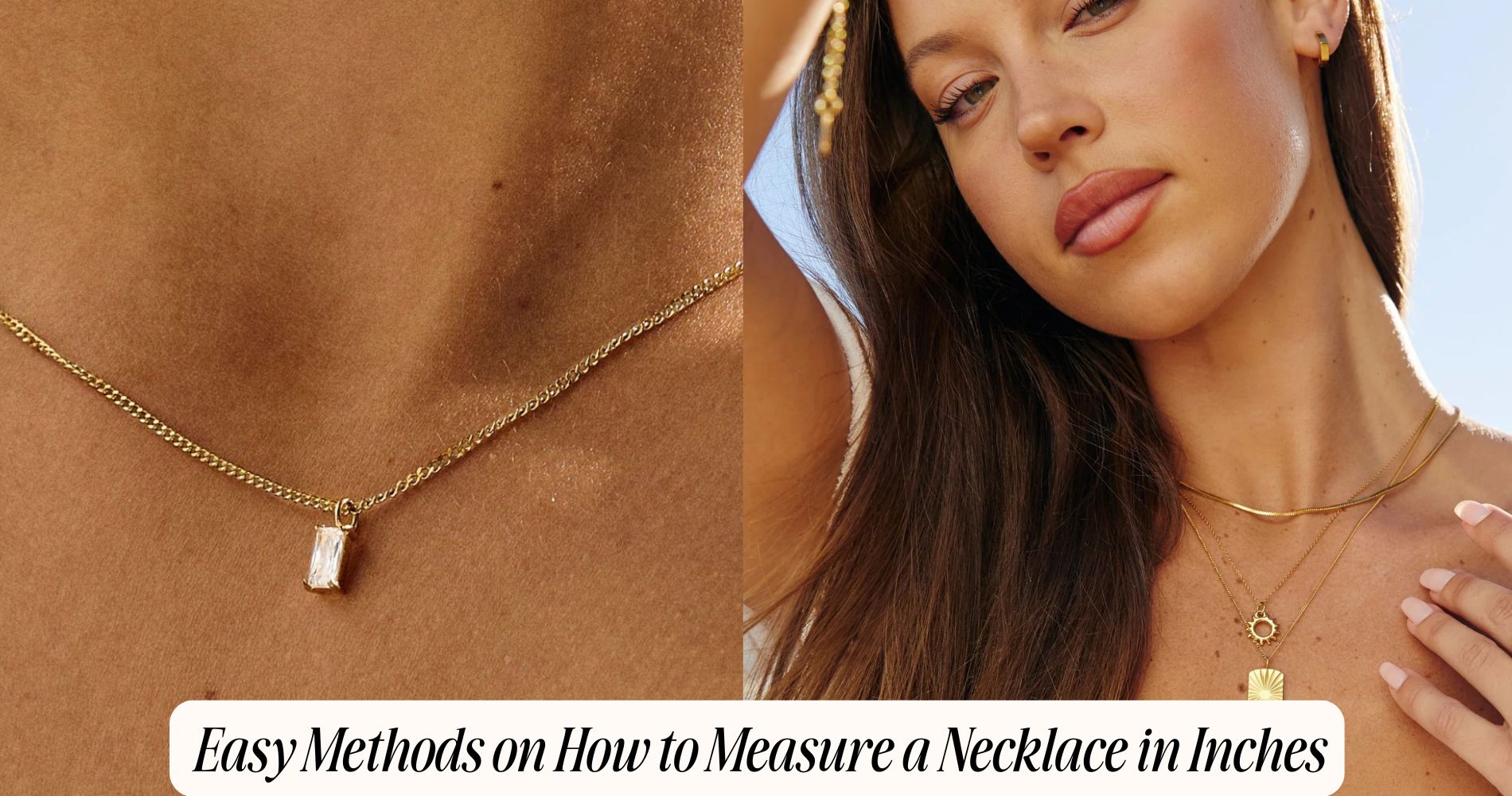
Easy Methods on How to Measure a Necklace in Inches
If you’ve ever wondered how to measure a necklace in inches, the process is simple. Lay your necklace flat and use a soft measuring tape to check the length from clasp end to clasp end, keeping the chain straight without stretching it. For closed-loop styles, measure the inner circumference instead. If you don’t have a tape, you can align the chain along a ruler or mark its length on a piece of string or paper before comparing it to a ruler. These steps come in handy when choosing pieces similar to those in our Spring Necklaces collection. Next, you’ll learn how these measurements align with standard necklace lengths.
Understanding Standard Necklace Lengths in Inches
Standard necklace lengths in inches follow a set of commonly accepted measurements that help you predict where a chain will sit on the body. You’ll encounter key benchmarks: 14" (collar), 16" (choker), 18" (princess), 20–24" (matinee), 28–36" (opera), and 36"+ (rope). Each measurement corresponds to a specific vertical drop from the base of your neck.

When you evaluate necklace types, you must account for anatomy and design. A 16" chain fits higher on a wide neck than on a slender one, creating effective length variations even at the same nominal size.
Heavier chains, bulky clasps, and curved pendants also alter how a stated length distributes around your neck and where the lowest point actually rests.
Measuring a Necklace With a Soft Measuring Tape
To measure a necklace accurately with a soft measuring tape, you first establish whether you’re measuring an open chain or a closed loop.
Lay the necklace flat on a hard, level surface to avoid distortion. For an open chain, align the clasp and ring fully extended, then place the zero mark of the soft tape at the end of one clasp component and follow the curve to the opposite end. Read the length directly in inches.
For a closed loop, place the soft tape at one point on the inner circumference and follow the necklace around until the tape meets its zero mark.
Ascertain there are no twists and maintain consistent tension on the tape for ideal measuring accuracy.
Using a Ruler or Yardstick to Measure Chain Length
A rigid measuring tool like a ruler or yardstick lets you gauge necklace length when a soft tape isn’t available, provided you position the chain correctly.
Lay the ruler flat on a stable surface with the zero mark clearly visible. Straighten the necklace without stretching links; align one end of the clasp exactly at zero.

Use ruler techniques such as checking from both ends to confirm consistency and minimizing parallax by viewing markings directly from above. If the chain exceeds the ruler, mark the endpoint with a fingertip, slide the ruler forward, and continue from that exact mark.
For longer pieces, place a yardstick along the chain to improve yardstick accuracy and reduce measurement segments, then total the measured inches.
How to Measure With String, Paper, or Household Items
When you don’t have a ruler or tape, improvised tools like string, paper strips, or common household items let you capture necklace length with reasonable precision.
For string measurement techniques, select non‑stretch string or thread. Align one end with the necklace clasp, follow the chain’s path under zero slack, and mark the string where it meets the opposite clasp end.
Lay the string against a sheet of paper, then convert length using known units: for example, an 8.5‑inch‑tall letter page or a 2.75‑inch‑diameter standard mason jar lid.
For paper, cut a narrow strip, wrap and mark it exactly as with string, then compare its length to household item alternatives—credit cards (3.37 inches wide) or standard US bills (6.14 inches long).
Finding Your Ideal Necklace Length on Your Body
Exactly where a necklace falls on your body depends on your neck circumference, torso length, and build, so you’ll get the most accurate fit by measuring directly on yourself rather than relying on standard size charts.
Stand straight, relax your shoulders, and use a flexible tape.
First, measure your neck circumference at the base. Add 2 inches for a close choker, 4 inches for a standard short necklace. Note this as your ideal fit baseline.
Next, measure from the base of your neck down your chest to target points: collarbone, upper bust, bust apex, and below bust. Record each distance.
Compare these measurements to common necklace lengths in inches and adjust according to your body proportions, posture, and comfort range.
Tips for Layering Necklaces Without Tangling
Although layering necklaces can add dimension and balance to your neckline, it also increases friction points that cause chains to knot unless you plan the structure carefully.
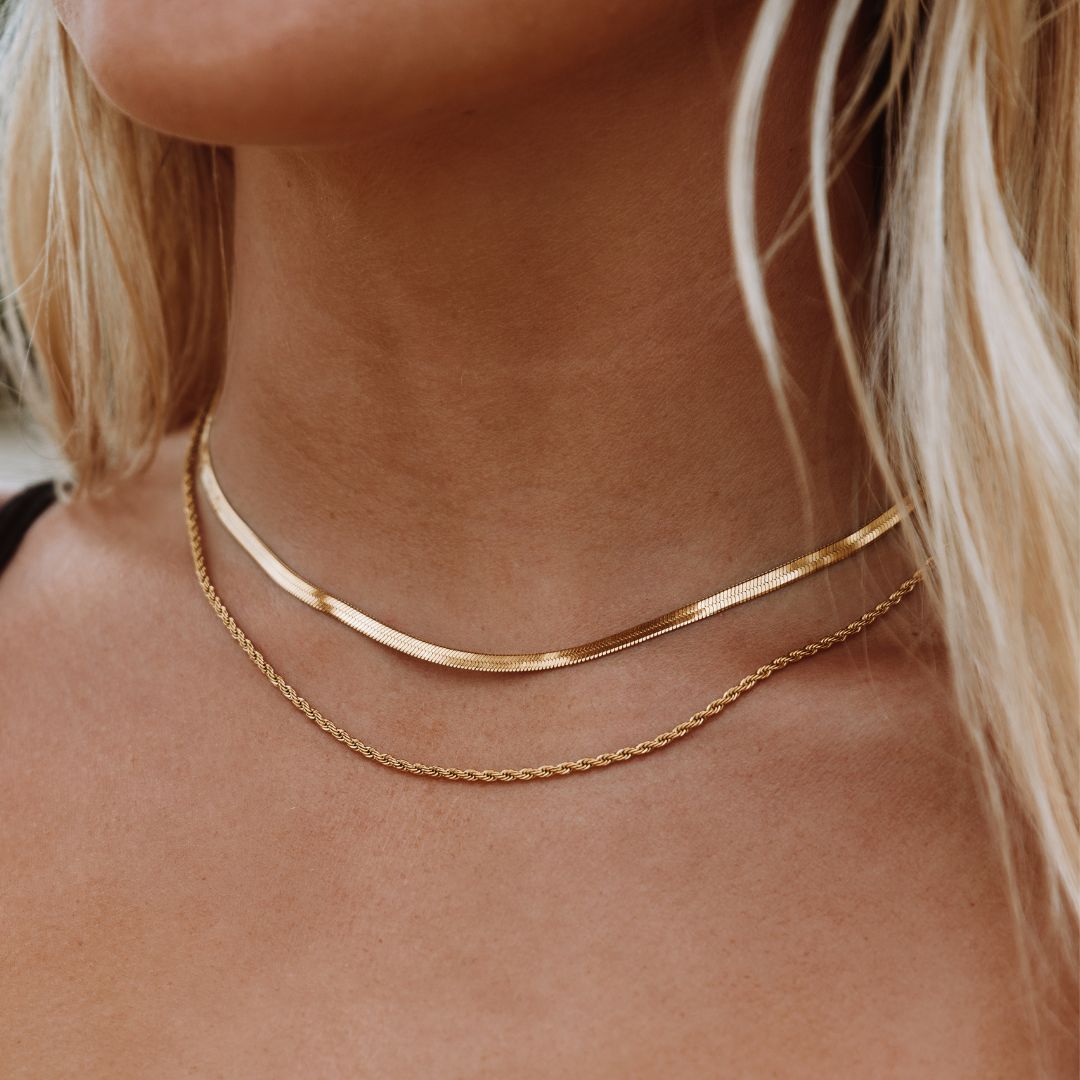
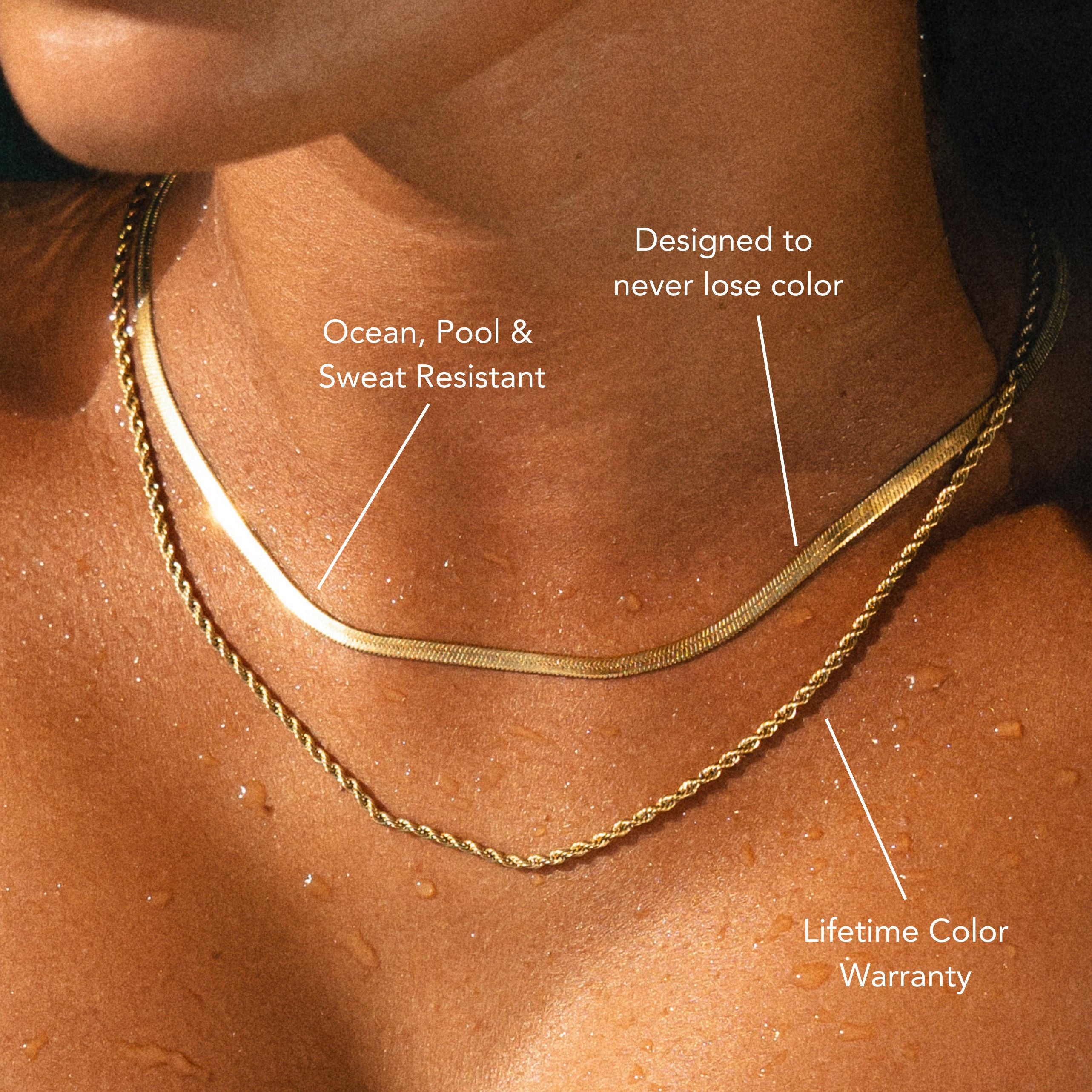
Use deliberate layering techniques: separate each chain by at least 2 inches in length, measured flat with a ruler or tape. Pair contrasting necklace styles—one delicate cable chain, one bead strand, one rigid bar or pendant—to reduce surface contact.
Select only one highly mobile piece; keep the others more structured to limit rotational twist. Attach lighter chains to a multi-clasp necklace separator to keep clasps aligned at the back.

Avoid mixing ultra-fine chains of similar gauge and length. Finally, fasten pendants at different vertical points so they don’t collide as you move.
Frequently Asked Questions
Can I Convert Necklace Measurements From Inches to Centimeters Easily at Home?
You can convert necklace measurements at home by multiplying inches by 2.54. Use precise conversion methods with digital calipers or a rigid ruler as measurement tools, then record lengths to at least one decimal place for accuracy.
How Do I Measure an Adjustable or Sliding Clasp Necklace Accurately?
You fully extend the necklace’s adjustable clasp, align it flat on a ruler, then measure metal end‑to‑end. Next, shorten via the sliding mechanism, measure the minimum length, and record both maximum and minimum measurements.
What’s the Best Way to Measure a Necklace With Large Pendant Charms?
You first lay the necklace flat and measure chain length alone, excluding pendants. Then note pendant placement from clasp to bail, factor total drop length, and account for charm weight’s stretch by measuring again while it’s vertically suspended.
How Can I Measure an Antique Necklace Without Damaging It?
You gently lay the antique necklace flat on acid‑free cloth, use flexible, non‑metal measuring tools, avoid pulling tension, measure clasp‑to‑clasp and pendant drop separately, document lengths, and prioritize antique necklace care over exact precision.
How Precise Do Necklace Measurements Need to Be for Online Selling Listings?
You should keep necklace measurement accuracy within ±1/8 inch. State exact length, clasp-to-clasp, plus drop or pendant length. Include metric conversion, measuring tool used, and tolerances; these selling tips reduce returns and disputes considerably.
Conclusion
Now you can measure any necklace accurately in inches, whether you’re using a soft tape, ruler, or simple household items. Apply consistent measuring points—from clasp end to clasp end—and note chain thickness, pendant drop, and desired drape on your body. Use your preferred length as a baseline, then adjust for neckline and layering. With these precise methods, you’ll select, compare, and stack necklaces confidently, minimizing tangling and maximizing comfort and proportion.





コメントを書く
このサイトはhCaptchaによって保護されており、hCaptchaプライバシーポリシーおよび利用規約が適用されます。