

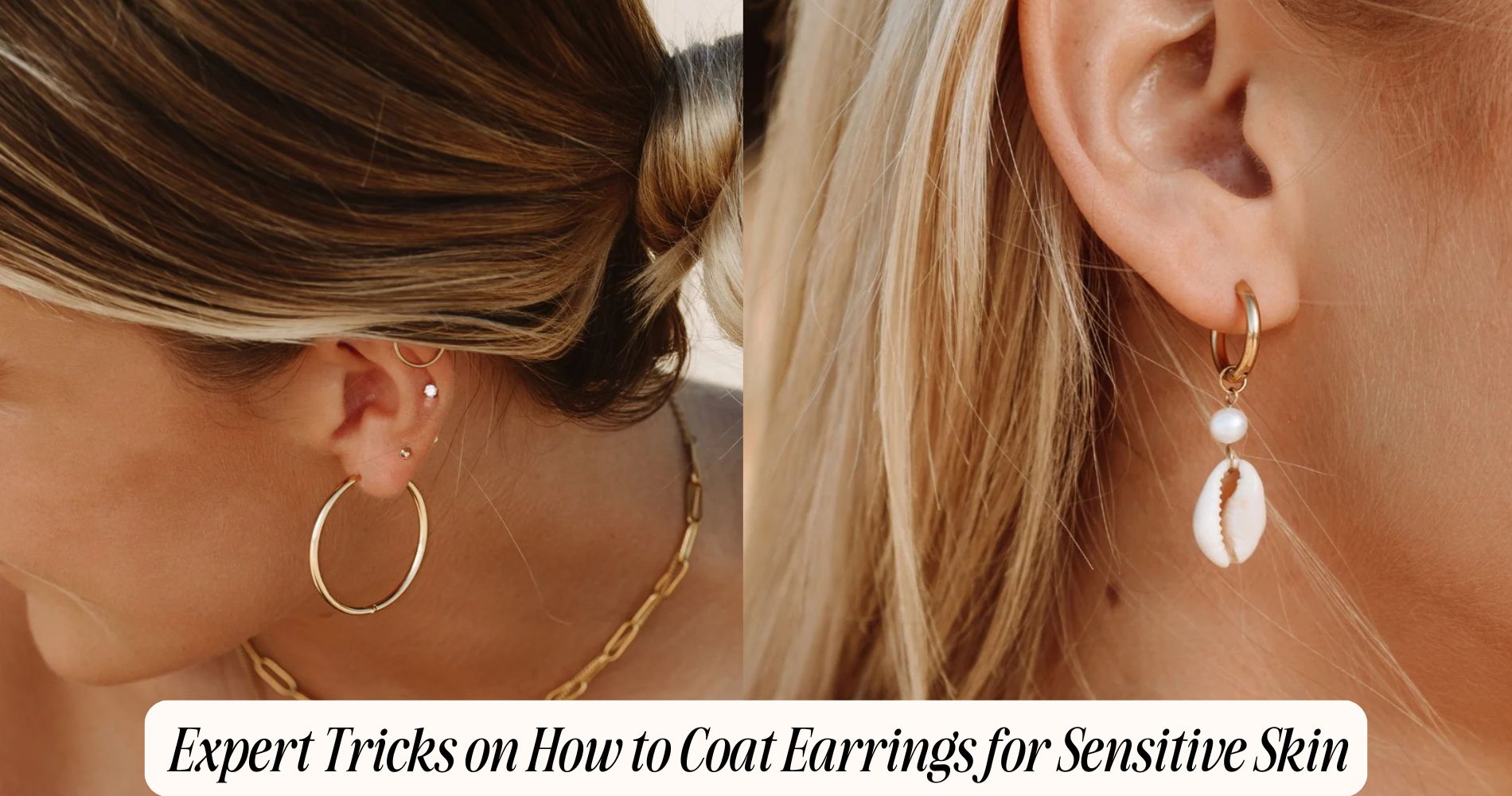
Expert Tricks on How to Coat Earrings for Sensitive Skin
If you’re searching for how to coat earrings for sensitive skin, start by cleaning your earrings with mild soap or isopropyl alcohol and letting them dry completely. Many people create a gentle barrier by applying clear, dye-free nail polish or a jewelry-safe coating to the posts, reapplying whenever it wears off. For longer-lasting protection, medical-grade silicone sleeves or barrier films can cover both the posts and backs. And if you prefer lightweight pieces that are naturally easier on sensitive ears, you can explore our vacation-earrings collection for comfortable, low-irritation options. Always remove earrings at the first sign of redness, burning, or oozing—there are more expert solutions you can try.
Understanding What Triggers Sensitive Ears
Although “sensitive ears” sounds vague, it usually reflects a clear biological response: your skin and immune system react to specific metals or surface contaminants in the earring.
When you understand your specific ear sensitivity triggers, you can choose safer materials and coating strategies.
In most people, the primary culprits are common allergens such as nickel, cobalt, and, less often, chromium.

Even “gold” or “silver” jewelry can contain these alloyed metals. Some individuals also react to trace residues from manufacturing, detergents, or disinfectants left on the posts.
Friction, tight backings, and prolonged wear increase penetration of these substances into the skin barrier.
You’ll want to think of sensitive ears as a localized allergic contact dermatitis risk, not just “delicate skin.”
How to Tell If Your Earrings Are Causing a Reaction
So how can you tell if your earrings are actually triggering a reaction rather than just feeling a bit uncomfortable?
First, look for early skin irritation: redness that persists beyond a few hours, warmth, or a tight, burning sensation around the piercing. You may also notice localized swelling that doesn’t settle once you remove the earrings.
More specific allergy symptoms include clear fluid oozing, crusting, or small blisters directly where metal contacts skin. Itching that becomes intense or keeps returning when you reinsert the same pair is another key clue.
Watch for delayed reactions, appearing 12–48 hours after wear. If you see spreading redness, significant pain, or pus, treat it as possible infection and seek prompt medical evaluation.
Best Hypoallergenic Metals and Coatings to Look For
Materials matter when you’re trying to prevent earring reactions, and some metals are far safer for sensitive skin than others.
If you’re nickel‑reactive, choose hypoallergenic materials such as implant‑grade titanium (ASTM F‑136 or F‑1295) or medical‑grade niobium; both release negligible metal ions and rarely trigger dermatitis.
High‑karat yellow gold (18K–22K) and platinum are generally well tolerated, provided they’re nickel‑free.
For budget options, look for stainless steel labeled ASTM F‑138 or F‑316LVM, which has tightly controlled nickel release.
Verify “nickel‑free” or “EU nickel directive compliant” on labels when possible.
You can also reduce exposure by adding safe coatings.
Clear, medical‑grade silicone sleeves or polymer barriers specifically marketed for jewelry create a physical shield between metal and skin.
Preparing Your Earrings Before Applying Any Coating
Before you apply any coating, you need to treat your earrings like a minor medical device and prepare them accordingly. Start by cleaning earrings with a mild, fragrance‑free soap or a 70% isopropyl alcohol wipe, then let them air‑dry completely. Remove all visible debris, old coating, and skin oils; residual contaminants can trap allergens against your skin.

Next, examine each component under good light. When inspecting materials, verify whether posts, hooks, and backs are solid hypoallergenic metals or only plated. Look for worn plating, discoloration, pitting, or exposed base metal, especially at friction points.
If you see green, black, or reddish staining, assume corrosion. Don’t coat visibly damaged, flaking, or poorly soldered earrings; they may irritate skin regardless of any barrier you add.
Using Clear Nail Polish to Create a Protective Barrier
Once your earrings are clean and structurally sound, you can use clear nail polish to add a temporary barrier between the metal and your skin. This method isn’t medical treatment, but it can reduce direct contact with nickel or other reactive alloys.
For safe clear polish application, choose a basic, transparent formula without glitter, dyes, or strong fragrances, which may increase irritation risk.
Apply a thin, even coat to posts, hooks, and any part that touches your skin. Let it dry completely—at least 20–30 minutes—before wearing, and reapply every few wears, since friction and moisture degrade the coating.
Potential protective barrier benefits include less redness, itching, and localized burning. Discontinue use immediately if you notice increased irritation or swelling.
Sealing Earring Posts With Jewelry Shield or Skin Guard Products
Although clear nail polish works as a short-term fix, purpose-made jewelry shield or skin guard products usually provide a more durable and controlled barrier for sensitive ears.
These coatings are typically acrylic or polymer solutions designed to isolate skin from allergenic metals such as nickel, cobalt, or copper alloys.
For best results, clean and dry the earring posts thoroughly, then apply a thin, even layer according to specific jewelry shield applications on the label.
Let each coat cure fully before adding another. Reapply after several wears or whenever you notice flaking.
You may experience skin guard benefits such as reduced redness, burning, or delayed hypersensitivity reactions.
Discontinue use and consult a clinician if you develop itching, blistering, or eczematous changes around the piercings.
Coating Earrings With Medical-Grade Tapes and Barriers
When jewelry coatings aren’t enough on their own, you can also use medical‑grade tapes and barrier films to physically separate your skin from the metal parts of an earring.
You’re fundamentally adding protective barriers where irritation usually occurs: the post, backing, and underside of the decorative front.
Choose hypoallergenic, medical grade tapes (such as polyurethane or silicone‑based, labeled for sensitive skin).
Cut a narrow strip, then wrap or fold it around the post, keeping the surface smooth so it passes easily through the piercing.

For studs, you can also cover the inner side of the backing.
Always patch‑test new materials on nearby skin for 24 hours.
If you notice redness, burning, or oozing, discontinue use and consult a dermatologist.
DIY Silicone and Resin Methods for Long-Lasting Protection
Tapes and barrier films work well for short wear, but for earrings you use frequently, you may want a coating that cures into a stable, longer‑lasting layer.
With DIY silicone application techniques, choose a skin-contact–grade, platinum‑cured silicone if possible. Clean and fully dry the metal, then apply the thinnest uniform layer around posts and hooks, avoiding the stone settings. Let it cure per manufacturer instructions before wearing.
For resins, prioritize products marketed as skin-safe or jewelry-safe. Follow precise resin curing methods: measure components accurately, mix thoroughly to reduce unreacted monomer, and cure for the full recommended time under adequate ventilation.
Discard any piece that remains tacky, discolors, or develops surface cracks, as these changes may increase irritation risk.
Daily Care and Cleaning Habits to Prevent Irritation
Even with hypoallergenic materials and protective coatings, your daily cleaning routine largely determines whether your ears stay calm or become inflamed. For effective irritation prevention, treat your earrings like medical devices that contact broken skin.
Before handling earrings, wash your hands with soap and water. Clean posts and backs with 70% isopropyl alcohol or saline; avoid hydrogen peroxide for routine care, as it can delay healing.
In your daily cleaning, gently wipe front and back of the lobes with saline or a pH-balanced, fragrance-free cleanser, then dry thoroughly. Don’t twist earrings aggressively; that can create micro-tears.
Remove earrings before swimming, heavy sweating, or applying hair products. If redness, warmth, or oozing appears, discontinue wear and monitor closely.
When to Replace, Repair, or Upgrade Your Jewelry Collection
Although you can extend the life of favorite pieces with coatings and careful cleaning, some earrings eventually become unsafe for sensitive skin and should be replaced, repaired, or upgraded.
Use these jewelry replacement tips: discard earrings if the post is pitted, flaking, or greenish, since damaged plating exposes allergenic base metals. Replace missing backings with medical‑grade or titanium options; don’t improvise with tape or rubber bands.
Consider professional repair if a cherished pair only has worn plating but structurally intact metal. Ask your jeweler about hypoallergenic replating (rhodium over gold, or palladium), and verify nickel‑free documentation.
For upgrade considerations, convert daily‑wear posts to solid titanium, niobium, or high‑karat nickel‑free gold when you notice recurring irritation despite correct coating and hygiene.
Frequently Asked Questions
Can I Coat Costume Jewelry With Household Items Like Beeswax or Petroleum Jelly?
You can use beeswax or petroleum jelly, but you shouldn’t rely on them long term. Beeswax benefits include temporary barrier formation; petroleum jelly occludes skin. Both wear off quickly, may trap allergens, and don’t replace hypoallergenic metals.
How Long Do Most Earring Coatings Last Before Needing Reapplication?
Most coatings last from one wear to several weeks, depending on coating longevity factors like material type, skin acidity, and friction. You should inspect surfaces regularly; as earring maintenance tips, reapply at the first sign of exposed metal.
Are There Special Coating Tips for Stretched Ears or Gauges?
You should prioritize biocompatible gauge materials and avoid coating anything used during stretching techniques. Once fully healed, apply thin medical‑grade barrier films only to external surfaces, monitor for irritation, and discontinue immediately if redness, discharge, or pressure pain develops.
Can I Safely Combine Multiple Coating Methods on the Same Earrings?
You can combine coating methods, but use combination techniques cautiously. Apply one fully cured, biocompatible layer first, then add another. Prioritize medical‑grade materials, avoid stacking unknown products, and monitor skin closely; discontinue immediately if irritation overrides safety precautions.
Do Coating Methods Differ for Hoops, Studs, Dangles, and Clip-On Earrings?
Yes, coating methods differ slightly. You’ll apply hoop coatings and dangle coatings mainly along posts and curves, stud coatings just on posts and backs, and clip on coatings on all contact surfaces, avoiding hinges or tension areas.
Conclusion
By understanding what triggers your ear sensitivity and choosing safer metals and coatings, you can dramatically lower your risk of irritation. Use barriers—like clear polish, medical tapes, or resins—cautiously and discontinue them at the first sign of redness, burning, or swelling. Prioritize daily cleaning, limit wear time, and monitor your symptoms. If reactions persist despite these strategies, consult a dermatologist and consider upgrading to verified hypoallergenic or medical-grade earrings.






コメントを書く
このサイトはhCaptchaによって保護されており、hCaptchaプライバシーポリシーおよび利用規約が適用されます。