

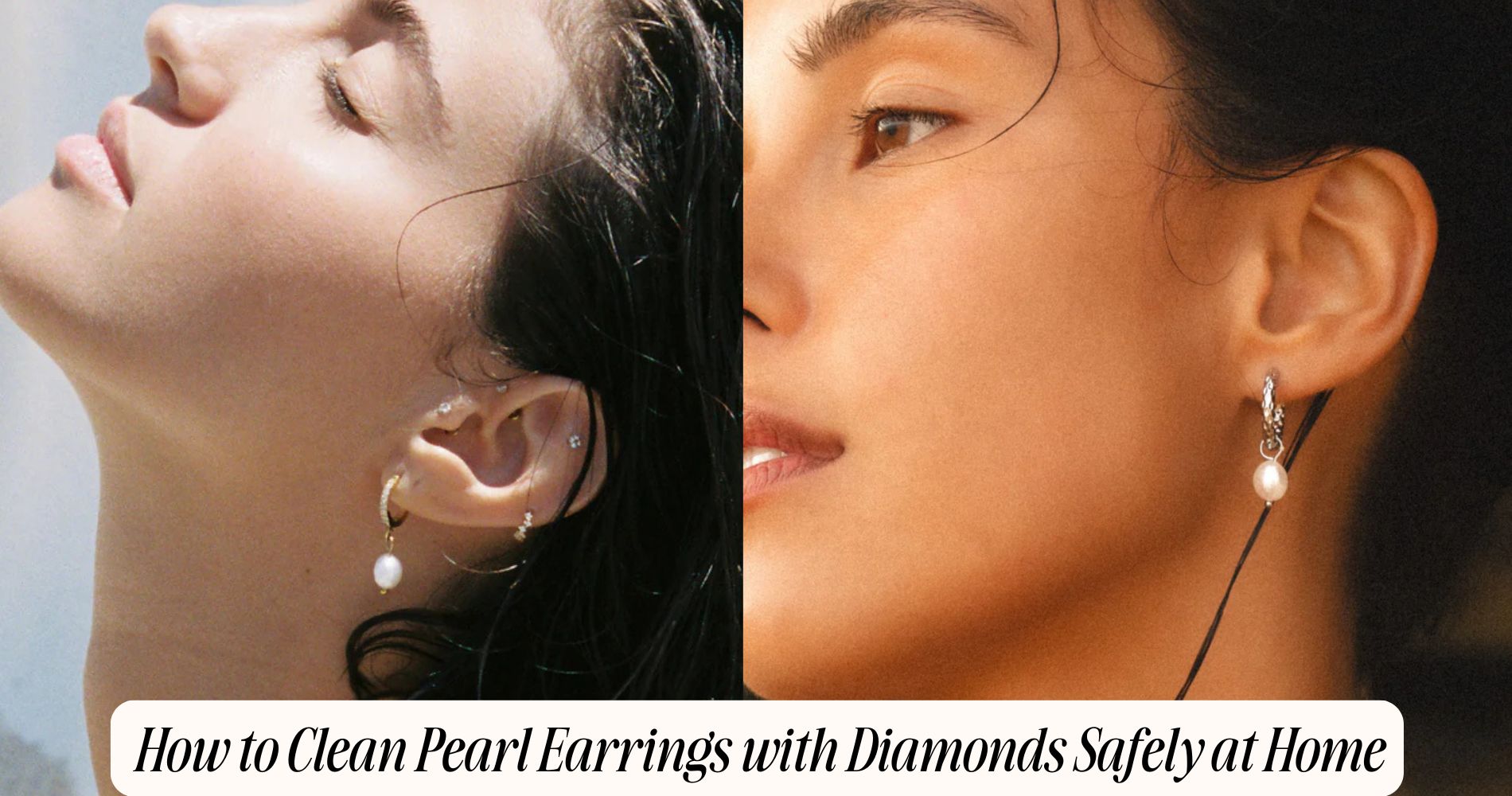
How to Clean Pearl Earrings With Diamonds Safely at Home
Learning how to clean pearl earrings with diamonds starts with using the gentlest materials possible. Fill a shallow non-metal dish with lukewarm distilled water and add a few drops of pH-neutral, dye-free jewelry soap. Dip only the diamond portions while keeping the pearls dry. Using a fine, soft brush, carefully clean around the diamond prongs and pavé, avoiding any contact with the pearls. Then lightly wipe each pearl with a damp microfiber cloth, followed by a second cloth moistened with clean water. Blot dry and allow the earrings to air-dry completely. Avoid ammonia, alcohol, ultrasonic machines, or steam—especially if you wear your pieces daily, including styles like our waterproof earrings, as these gentle steps help maintain long-lasting shine and protect the pearls from damage.
Understanding the Delicate Nature of Pearls and Diamonds
Although pearls and diamonds often appear together in fine jewelry, they differ radically in structure, hardness, and chemical sensitivity, which determines how you must clean them.
You deal with organic versus crystalline materials. Pearl properties derive from aragonite platelets bound by conchiolin; this nacreous composite is micro-porous, relatively soft (Mohs ~2.5–4.5), and vulnerable to acids, alkalis, alcohol, ultrasonic vibration, and thermal shock.

In contrast, diamond durability comes from a covalent carbon lattice, Mohs 10 hardness, and high chemical resistance, though cleavage planes remain impact-sensitive.
You can safely expose diamonds to stronger surfactants and higher temperatures than pearls tolerate, but you must protect the pearl surfaces from abrasion, desiccation, and pH extremes.
Always base your cleaning approach on the most fragile component: the pearls.
Tools and Gentle Cleaning Solutions You’ll Need
A controlled setup and properly formulated solutions prevent you from etching or dehydrating pearl nacre while still removing skin oils and surface grime.
You’ll need a shallow non-metallic dish, distilled water, and pH-neutral, dye‑free soap designed for delicate jewelry as your primary gentle solutions. Avoid ammonia, alcohol, and ultrasonic or steam devices, which can destabilize nacre and organic binders.
As core cleaning supplies, assemble a new, ultra-soft microfiber cloth, lint‑free cotton pads, and a very soft, fine‑bristle brush (baby toothbrush or artist’s sable brush).
Keep wooden or plastic toothpicks for carefully accessing metal crevices—not for touching the pearls.
Lay out a padded, clean work surface and a mesh drain cover to prevent accidental loss of small earring components.
Step-by-Step Guide to Cleaning Pearl-and-Diamond Earrings
When you clean pearl-and-diamond earrings, treat the piece as two distinct materials with different tolerances so you don’t over-clean the diamonds and under-protect the pearls.
Begin by preparing a lukewarm, mildly soapy bath in a non-metallic dish. Submerge only the diamond sections, keeping the pearls above water to prioritize pearl care and avoid nacre swelling.
Use a very soft brush to agitate around prongs and diamond pavé, focusing on precise diamond maintenance while not touching the pearls.
Next, dampen a microfiber cloth with the same solution and gently wipe each pearl in straight, minimal passes—never scrubbing.
Rinse by wiping with a separate cloth moistened in clean water, again keeping immersion to the diamonds only.
Drying, Polishing, and Inspecting the Settings
Once the cleaning solution’s removed, you need to dry, buff, and inspect the earrings methodically to protect the pearls and verify structural integrity.
Use conservative drying techniques: blot each pearl and metal component with a non-abrasive, lint-free microfiber, then let the earrings air-dry on a clean, soft surface, away from heat and direct sunlight.
Next, apply polishing methods only to the metal and diamond areas. Using a separate, dry polishing cloth, make small, controlled strokes around prongs, galleries, and posts, avoiding direct friction on the nacre.
Finally, examine the settings under strong, indirect light. Check prong tension, look for metal fatigue, and confirm each diamond and pearl sits securely without rotational play or visible gaps.
Common Mistakes That Can Damage Your Earrings
Despite their elegant appearance, pearl earrings are structurally vulnerable, and a few common missteps can rapidly degrade their nacre, loosen settings, or weaken metals.
When you clean them, never use ultrasonic cleaners, steamers, or abrasive pastes; these can cause micro‑pitting on pearls and destabilize prong tension around diamonds. Avoid harsh chemicals such as ammonia, bleach, vinegar, or alcohol-based solutions, which dehydrate nacre and strip protective orient.
Don’t submerge earrings for prolonged periods; excessive soaking can infiltrate drill holes, swelling silk or nylon threads and weakening adhesive bonds.
Using rough cloths or paper towels can create fine scratches that accumulate into visible dullness.

Finally, improper storage alongside harder gemstones allows contact abrasion, chipping nacreous layers and introducing stress fractures around diamond mountings.
Ongoing Care, Storage Tips, and When to See a Jeweler
Proper cleaning technique prevents immediate damage, but long-term preservation depends on disciplined wear and storage habits and timely professional inspection.
For ongoing maintenance, always remove your pearl-and-diamond earrings before exercising, swimming, or applying cosmetics. After each wear, perform a quick wipe-down with a dry, non-abrasive microfiber cloth to remove skin oils and environmental contaminants.
Prioritize controlled storage solutions: place earrings in a lined compartment or individual soft pouches, never loose in a jewelry box.
Keep pearls away from excessive heat, low humidity, and direct sunlight to prevent nacre dehydration and microcracking.

Schedule a professional jeweler inspection every 6–12 months. Ask for prong integrity checks, post and backing stability, pearl looseness assessment, and ultrasonic cleaning of diamond areas only, avoiding pearl exposure.
Frequently Asked Questions
Can I Wear Pearl-And-Diamond Earrings While Swimming or Showering?
You shouldn’t. Chlorinated pools and saltwater compromise nacre integrity; swimming precautions mandate removal. Showering risks include surfactants, heat, and water pressure, which degrade pearl luster and weaken earring settings, increasing micro-abrasion, prong fatigue, and long-term structural instability.
How Do I Tell if the Pearls or Diamonds Are Real at Home?
You perform basic fake detection using non-destructive gem identification tests: rub pearls against teeth for subtle grittiness, inspect drill holes, fog diamonds for rapid defogging, check refractive brilliance, use a jeweler’s loupe, avoid scratch tests.
Are Ultrasonic or Steam Cleaners Ever Safe for Pearl-And-Diamond Earrings?
You shouldn’t use either; ultrasonic safety for composite pieces is poor, and steam cleaner risks include nacre delamination, surface etching, and adhesive failure. Restrict cleaning to mild surfactant solutions, distilled water, and non-abrasive, lint-free wiping.
How Often Should Pearl Earrings With Diamonds Be Professionally Re-Strung or Reset?
You should schedule re stringing frequency every 3–5 years and evaluate diamond resetting every 5–10 years, but shorten intervals if you notice frayed thread, gapping, loose prongs, worn seats, or compromised solder joints.
What Should I Do if a Pearl or Diamond Becomes Loose During Cleaning?
Stop cleaning immediately when you detect a loose gemstone. Rinse gently, pat dry, and store individually. Avoid adhesives or tightening yourself; instead, consult a credentialed bench jeweler to evaluate prong integrity, post alignment, and professional repair options.
Conclusion
By following these controlled, non-abrasive cleaning protocols, you’ll preserve nacre integrity, maintain diamond brilliance, and protect your earring settings from premature wear. Stick to pH-neutral solutions, minimal moisture, and lint-free materials to avoid micro-scratches or weakened threads. With proper storage, regular visual inspections, and timely professional prong and post checks, you’ll extend the service life of your pearl-and-diamond earrings and guarantee they remain structurally sound and aesthetically pristine.





コメントを書く
このサイトはhCaptchaによって保護されており、hCaptchaプライバシーポリシーおよび利用規約が適用されます。