

Does Silver Plated Jewelry Last Long? Proven Tips
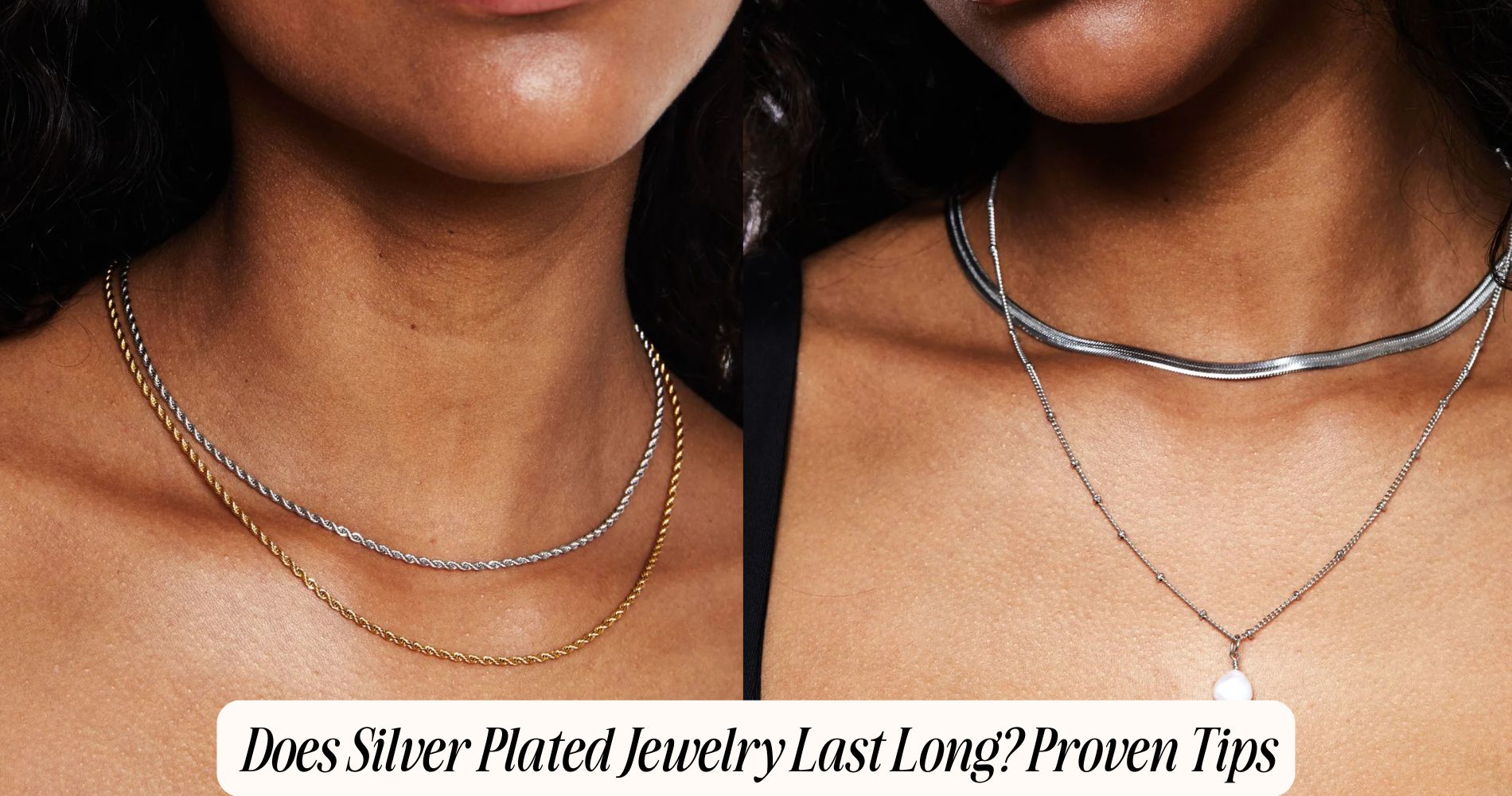
If you’ve ever wondered does silver plated jewelry last long, the truth is that it typically lasts anywhere from 6 months to 2 years, depending on factors like plating thickness, the base metal, and how often you wear it. Because it’s only a thin layer of silver over brass or copper, things like friction, water, sweat, lotions, and stacking can cause it to fade more quickly. You can extend its lifespan by keeping it dry, cleaning it with mild soap and a soft cloth, and storing each piece separately with anti-tarnish support. And if you enjoy delicate styles — especially pieces similar to those in our cute silver necklaces collection — adopting a few simple care habits can make a big difference.
Understanding What Silver Plated Jewelry Really Is
At its core, silver plated jewelry is a base metal—often brass, copper, or a low-cost alloy—coated with a microscopically thin layer of silver applied through electroplating.
You’re not wearing solid silver; you’re wearing a composite structure. When you understand the jewelry composition, you can judge quality more accurately.
During the silver plating process, the base metal is cleaned, electrically charged, and submerged in a silver ion solution. Silver ions bond to the surface, forming a uniform metallic skin measured in microns.

Thicker deposits offer better surface integrity and resistance to exposure. You should always distinguish between “silver plated,” “sterling silver,” and “fine silver,” because each has a different base structure, purity, and performance profile that affects how the piece behaves in real-world wear.
How Long Silver Plating Typically Lasts (And Why It Varies)
Once you understand that silver plated jewelry is just a thin metallic skin over a base metal, it becomes clear why its lifespan isn’t fixed.
In normal wear, you can expect decent silver durability for about 6 months to 2 years, but that range shifts with use and construction quality.
Plating thickness is the primary technical variable. Ultra-thin “flash” plating may last only a few months of frequent wear, while heavier plating (10–20 microns) can maintain its appearance for several years.
Contact points—rings and bracelets—wear faster than earrings or pendants because of friction.
Alloy choice for the base metal and how well the surface was prepared before electroplating also determine how long the silver layer adheres and resists wear.
Common Problems: Tarnish, Fading, and Green Skin
Anyone who’s worn silver plated jewelry for a while has seen the same issues show up: surface tarnish, dull or patchy fading, and sometimes a green or dark stain on the skin.
Tarnish forms when the thin silver layer reacts with sulfur and oxygen, creating silver sulfide on the surface. Without consistent tarnish prevention, this film builds up and obscures the metal’s reflectivity.
Fading happens as friction and abrasion gradually remove the silver layer, exposing base metals such as brass or copper.
Once that underlayer shows, you’ll notice color shifts and a less uniform finish.
Green skin or dark marks stem from metal ions—usually copper—migrating onto your skin, where sweat, pH, and cosmetics intensify visible skin reactions.
Daily Habits That Quietly Damage Silver Plated Pieces
Although silver plated jewelry looks durable, many ordinary routines quietly break down its thin surface layer. When you wear pieces in the shower, chlorinated pools, or the ocean, water and dissolved salts penetrate micro-pores in the plating and accelerate corrosion.
Friction from stacking bracelets or rings grinds away the silver, exposing the base metal.
Harsh cleaning methods also cause damage. Abrasive pastes, stiff brushes, and ultrasonic cleaners can strip microns of silver in a single session.
Sweat, lotions, perfumes, and hair products introduce acids and sulfides that chemically attack the surface.

Poor storage solutions compound this. Tossing jewelry into open trays, bathrooms, or mixed metal piles increases humidity, scratching, and galvanic reactions that degrade silver plating far faster than you’d expect.
Proven Care Tips to Make Silver Plated Jewelry Last Longer
With a few deliberate habits, you can dramatically extend the life of silver plated jewelry by minimizing mechanical wear, chemical exposure, and tarnish.
Use non‑abrasive cleaning techniques: a soft microfiber cloth and mild, phosphate‑free soap in lukewarm water. Avoid paper towels, baking soda pastes, and abrasive polishing compounds that thin the plated layer.
Rinse thoroughly and dry immediately to prevent water spots and mineral deposits from etching the surface.
Implement disciplined storage solutions: keep pieces in individual soft pouches or lined compartments to prevent friction and scratching. Add anti‑tarnish strips or silica gel packs to reduce sulfur and moisture exposure.
Always remove jewelry before swimming, showering, or applying cosmetics, perfumes, and lotions to preserve plating integrity.
When to Repair, Re‑Plate, or Replace Your Jewelry
Even well‑cared‑for silver plated jewelry eventually reaches a point where you must decide whether to repair, re‑plate, or replace it.
You should first inspect the metal closely under strong light. Key repair signs include loose clasps, bent prongs, weakened jump rings, and stones at risk of falling out. These structural issues justify professional repair before you consider any surface treatment.
Choose re‑plating when the base metal shows through on high‑friction areas, but the underlying structure remains solid. A jeweler can strip residues, micro‑polish, and apply a fresh, uniform silver layer to restore reflectivity and corrosion resistance.

Consider replacement options when brass or nickel cores are heavily exposed, pitted, or corroded, or when previous re‑plating has excessively thinned details.
Frequently Asked Questions
Is Silver Plated Jewelry Safe for Sensitive Skin and Metal Allergies?
Silver plated jewelry isn’t always safe for sensitive skin; base metals can trigger allergy reactions and skin irritation. You should choose nickel-free, hypoallergenic bases, thicker silver plating, and protective clear coatings to reduce direct allergen contact.
Can I Shower or Swim With Silver Plated Jewelry Occasionally?
You shouldn’t shower or swim with silver plated jewelry, even occasionally. Water exposure effects accelerate tarnish, weaken bonding, and cause base-metal bleed. For ideal silver plating maintenance, remove pieces before water, then dry and store them in low-humidity conditions.
How Does Silver Plated Jewelry Compare to Stainless Steel in Durability?
Silver plated jewelry’s surface wears faster than stainless steel, so it’s less durable overall. You’ll pay less initially (cost comparison), but you’ll re‑plate more often. Stainless steel needs minimal maintenance; polish silver plate gently and avoid abrasives, moisture, and chemicals.
Does Silver Plated Jewelry Have Any Resale or Pawn Value?
You’ll find silver plated jewelry has minimal resale value because the silver layer’s thin and hard to recover. Pawnshops rarely prioritize it, so pawning options are limited unless the piece has strong brand recognition or design value.
Is Silver Plated Jewelry Suitable for Engagement or Wedding Rings?
Silver plated jewelry isn’t ideal for daily-wear engagement or wedding rings. You’ll face rapid wear, exposed base metal, and difficult refinishing. For engagement ring alternatives and wedding ring considerations, prioritize solid sterling silver, gold, or platinum instead.
Conclusion
When you understand what silver plated jewelry is and how its thin coating behaves, you can manage wear instead of just reacting to it. If you store it correctly, avoid friction, chemicals, and moisture, and clean it with the right materials, you’ll greatly slow down tarnish and thinning. Pay attention to early signs of brass or base metal showing through so you can decide whether to re‑plate, repair, or replace while preserving overall quality.





コメントを書く
このサイトはhCaptchaによって保護されており、hCaptchaプライバシーポリシーおよび利用規約が適用されます。