

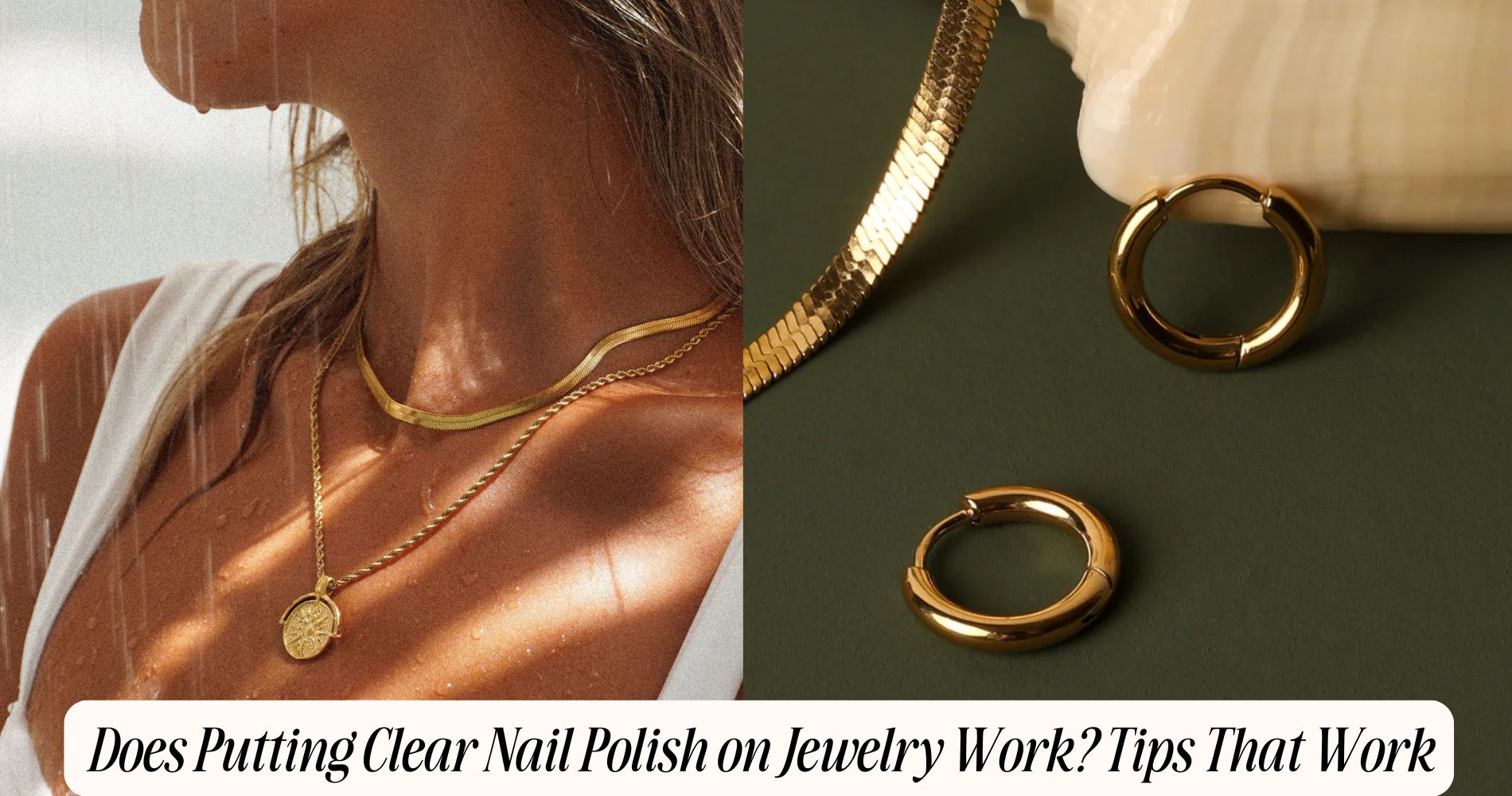
Does Putting Clear Nail Polish on Jewelry Work? Tips That Work
How Clear Nail Polish Interacts With Different Metals
When you brush clear nail polish onto metal jewelry, it forms a thin plastic-like barrier on the surface, but how well it works depends heavily on the type of metal underneath.
You’re basically placing a transparent coating between your skin and the metal, so metal reactions, texture, and finish all affect polish adhesion.
On smooth, plated pieces—like gold-plated brass—the polish usually grips well, but it may peel if the plating’s already worn.

Sterling silver often accepts an even coat, yet tiny scratches can let tarnish form underneath.
Stainless steel is harder and slicker, so polish may chip faster.
Cheaper base metals, especially copper alloys, can discolor the polish itself.
Knowing the underlying metal helps you predict how stable that barrier will stay.
When Clear Nail Polish Actually Helps Your Jewelry
Used in the right situations, clear nail polish can genuinely extend the life and comfort of your jewelry by acting as a temporary sealant.
It’s most helpful on inexpensive costume pieces where thin plating wears quickly. A thin, even layer over metal that touches your skin can reduce green stains and irritation, especially around ring bands, earring posts, and necklace clasps.
You also boost jewelry longevity by sealing loose stones or tiny prongs in budget settings. The polish acts like a light glue, helping keep rhinestones and crystals from popping out.
On decorative areas that don’t flex much, it can serve as one of several protective coatings against tarnish and surface wear, buying you extra time before professional cleaning or replating is needed.
Situations Where Clear Nail Polish Can Cause Damage
Although clear nail polish seems harmless, it can quietly damage certain pieces if you treat it as a cure‑all.
On plated jewelry, the solvents may soften or lift thin metal layers, speeding up jewelry corrosion instead of preventing it.
On soft stones like opals, pearls, or turquoise, nail polish reactions can cloud the surface, alter color, or create stubborn residue that’s nearly impossible to remove.
You’ll also risk damage when you coat moving parts—hinges, clasps, and chains.
The polish can harden in tiny gaps, making them stiff or brittle so they break under normal wear.
Even on skin-safe metals, thick or repeated layers may yellow, crack, and trap moisture against the metal, creating dull spots and uneven tarnish patterns.
Step-by-Step Guide to Applying Clear Nail Polish to Jewelry
Done carefully, a clear nail polish coating becomes a simple, at‑home way to make your favorite pieces more comfortable and resistant to tarnish.

Start by washing the jewelry with mild soap and water, then dry it completely; any moisture or lotion will cause bubbling. Lay the piece on a protected, well‑lit surface.
Use thin, even strokes as your main application techniques, coating only the metal that touches your skin and avoiding stones, hinges, or clasps. Let the first coat dry 15–20 minutes, then add a second light layer if needed.
Rotate small items, like hoops or chains, to catch hidden edges.
For polish removal, use a cotton swab dipped in non‑acetone remover, working gently to avoid loosening glued components.
How Long the Nail Polish Coating Really Lasts
A clear nail polish barrier doesn’t last forever, but it usually holds up for several wears before you need to redo it. In normal, careful use, you can expect decent nail polish durability for about one to two weeks on rings and up to a month on earrings or pendants that don’t rub against skin constantly.
Friction, water, lotions, and sweat all slowly break down the coating. Areas that touch your skin or other surfaces repeatedly—ring bands, bracelet edges, necklace clasps—lose protection first.
Inspect your pieces under good light; if you see dull spots, cloudiness, or uneven shine, the barrier’s thinning. Reapplying a thin coat at those first signs helps maintain protection and supports overall jewelry lifespan without letting damage build up.
Safer Alternatives to Clear Nail Polish for Protecting Jewelry
Since clear nail polish wears down and can contain ingredients that irritate skin or react with metals over time, it makes sense to look at gentler ways to protect your jewelry.
You have a few safer, purpose‑made options that create barriers without turning brittle or gummy.
You can use jewelry wax, a microcrystalline wax formulated for metals. You rub a thin layer onto clean, dry pieces, then buff lightly. It forms a clear, breathable coating that helps repel moisture, fingerprints, and light abrasion. It’s easy to reapply and doesn’t peel.
Another option is anti tarnish spray. These sprays lay down an ultra‑thin, transparent film that slows oxidation on silver, brass, and copper. Apply in a well‑ventilated area, let it cure fully, and reapply as directed.
Tips to Prevent Green Fingers and Skin Irritation
Even if you love the look of a piece, you don’t have to put up with green fingers or itchy, irritated skin to wear it. Start by identifying metals that trigger your skin sensitivity; many people react to nickel or low-quality copper alloys.
Choose hypoallergenic options like surgical steel, titanium, or higher-karat gold when possible.
Before wearing a new piece, do a short test: wear it for a few hours, then check for redness or discoloration. Keep your skin dry where the jewelry sits; moisture speeds up metal reactions that cause green staining.

Apply an unscented barrier cream to your skin and let it fully absorb before putting jewelry on. Consistent jewelry maintenance—cleaning off sweat, lotion, and soap residue—also reduces irritation.
Care and Storage Habits That Keep Jewelry Looking New
Though clear nail polish can shield metal from your skin, your day-to-day care habits ultimately determine how fresh your jewelry looks over time.
Make quick jewelry cleaning part of your routine: gently wipe pieces with a soft, lint‑free cloth after wearing to remove oils, sweat, and lotion. For sturdier metals and stones, use mild soap, lukewarm water, and a soft brush, then dry thoroughly so moisture doesn’t sit in crevices.
Use storage solutions that limit air, friction, and tangling. Keep pieces in separate pouches or compartmented boxes, ideally lined with fabric. Store silver in anti‑tarnish bags, and keep everything away from direct sunlight and humidity.
Put jewelry on last, after perfume and hairspray, and take it off before showers, swimming, or workouts.
Frequently Asked Questions
Can Clear Nail Polish Change the Appearance or Shine of Gemstones in Jewelry?
Yes, clear nail polish can slightly dull or alter a gemstone’s sparkle, especially softer or porous stones. You create a thin gemstone coating that may cloud over as polish longevity fades, so always test a tiny hidden area first.
Is Clear Nail Polish Safe for People With Severe Nail Polish Allergies?
No, clear polish isn’t automatically safe if you’ve got severe nail polish allergies. You should treat it as risky, expect possible skin reactions, avoid direct contact, and ask your dermatologist to confirm ingredients or suggest hypoallergenic alternatives.
Can I Use Clear Nail Polish on Body Jewelry Like Belly Rings or Nose Studs?
You shouldn’t coat belly rings or nose studs with clear polish. For body jewelry application, polish can crack, trap bacteria, and irritate piercings. Instead, choose implant‑grade titanium or niobium to minimize safety concerns and allergic reactions.
Does Clear Nail Polish Affect the Resale or Appraisal Value of Jewelry?
Yes, it can. You’ll likely see a negative resale impact and appraisal concerns because polish hides metal hallmarks, alters appearance, and suggests tampering. You should remove residue professionally before selling or appraising valuable pieces.
Is There a Specific Type of Clear Nail Polish Best Suited for Jewelry Use?
You’ll get the best clear options by choosing a non‑yellowing, hard‑finish, “long‑wear” topcoat. Avoid quick‑dry formulas; they chip faster. Thin, even layers improve polish durability and reduce buildup around prongs, stones, and clasps.
Conclusion
You can use clear nail polish as a quick, temporary fix, but it’s not a magic shield. It works best on inexpensive metals, in thin, careful layers, and with regular touch‑ups. For cherished or valuable pieces, safer options—like jewelry sealants, plating, or simple good care habits—protect them far better. If you’re gentle, observant, and consistent with cleaning and storage, your jewelry will stay brighter, last longer, and be kinder to your skin.






コメントを書く
このサイトはhCaptchaによって保護されており、hCaptchaプライバシーポリシーおよび利用規約が適用されます。