

Which Ankle Should an Anklet Be Worn On? Simple Guide
Wondering which ankle should an anklet be worn on? You can choose whichever ankle fits your vibe and comfort. Wear it on your left ankle for a softer, intuitive, subtly romantic feel that pairs beautifully with minimalist sandals. For inspiration, check out delicate styles from our Beach Anklets collection. Opt for your right ankle when you want a bold, confident, flirty accent that catches the light and attention. Many fashion lovers even stack or mix both for a trend-forward, editorial look. Once you understand the mood each side creates, you can use ankle placement as a fun styling tool.
What Does It Mean to Wear an Anklet on the Left Ankle?
On your left ankle, an anklet often signals something more intentional than simple decoration. You’re not just adding shine; you’re curating a message.
In modern Left ankle symbolism, this side often feels more intuitive, emotional, and subtly romantic, so a left-ankle chain can hint at openness, softness, or connection without shouting it.

You might place a slim gold chain there to frame a minimalist sandal, or stack beaded strands to underscore a carefree, resort-ready mood.
The left side pulls the eye when you walk, so the anklet becomes a moving accent that shapes how your Personal style reads in motion—polished, bohemian, edgy, or feminine—making that single detail a deliberate, directional choice in your overall look.
What Does It Mean to Wear an Anklet on the Right Ankle?
Worn on the right ankle, an anklet often reads as bolder and more declarative—less about quiet intuition, more about visible intent.
When you choose the right ankle, you’re leaning into anklet symbolism that suggests confidence, flirtation, and a “look at me, I know what I’m doing” edge.
Visualize it: a sleek gold chain catching light as you cross your legs at a rooftop bar, or a beaded design brushing the strap of your sandals on a beach walk.
The right ankle placement directs attention, framing your step like a deliberate style statement. You’re not hinting; you’re signaling.
In current trends, that small shift in position becomes a powerful styling choice that telegraphs personality in a single glance.
Cultural and Historical Meanings of Anklet Placement
That simple choice between left and right ankle doesn’t just shape your vibe today; it echoes a long lineage of meaning stretching across cultures and centuries.
When you clasp an anklet, you’re stepping into cultural significance that runs deeper than a cute accessory.
In South Asian historical traditions, women often wore anklets on both ankles, yet the left side could hint at marital status or family ties.
In parts of the Middle East and North Africa, silver ankle chains on a specific leg once signaled tribe, region, or social rank.
Ancient Egyptians used gold anklets on preferred ankles to display wealth and devotion to deities.
Even today, your chosen side can subtly reference these layered stories, giving your look a quietly powerful narrative.
Modern Style Rules: When Anklet Placement Doesn’t Matter
In most modern outfits, anklet placement is less a rule and more a mood, so you’re free to treat left and right as interchangeable style zones.
Contemporary styling filters old symbolism through the lens of modern trends, where balance, proportion, and overall vibe matter more than “correct” ankles.
You might stack a delicate chain with a beaded anklet on either leg, letting the glint move as you walk.
You can mirror a statement earring with a bold anklet, or offset a minimalist sandal with a single subtle chain.
What counts now is personal expression: how the metal, charms, and layering echo your outfit’s colors and lines.
Left or right simply becomes another flexible canvas for your aesthetic.
Choosing the Best Ankle for Everyday Wear
Ultimately, choosing the “best” ankle for everyday wear comes down to comfort, habit, and how you move through your day.
Start by checking which ankle feels less restricted in your usual shoes—sneakers, loafers, or heels. If one side rubs against straps or socks, switch to the other.
Look at how current fashion trends style anklets: many influencers stack delicate chains on the leg that’s more visible in photos or when they cross their legs.
You can mirror that, or go the opposite way to highlight your personal style. If you’re right-handed, you might prefer your right ankle for easier clasping.

Test both sides for a week; notice which ankle looks more balanced and feels more natural in motion.
Anklet Placement and Relationship Status Myths
Although rumors still circulate on social media, anklet placement doesn’t secretly broadcast your relationship status the way many TikToks claim. You can wear an anklet on your left or right ankle without sending hidden relationship cues to strangers at brunch or on the beach.
Modern anklet symbolism leans far more toward personal style than coded messages.
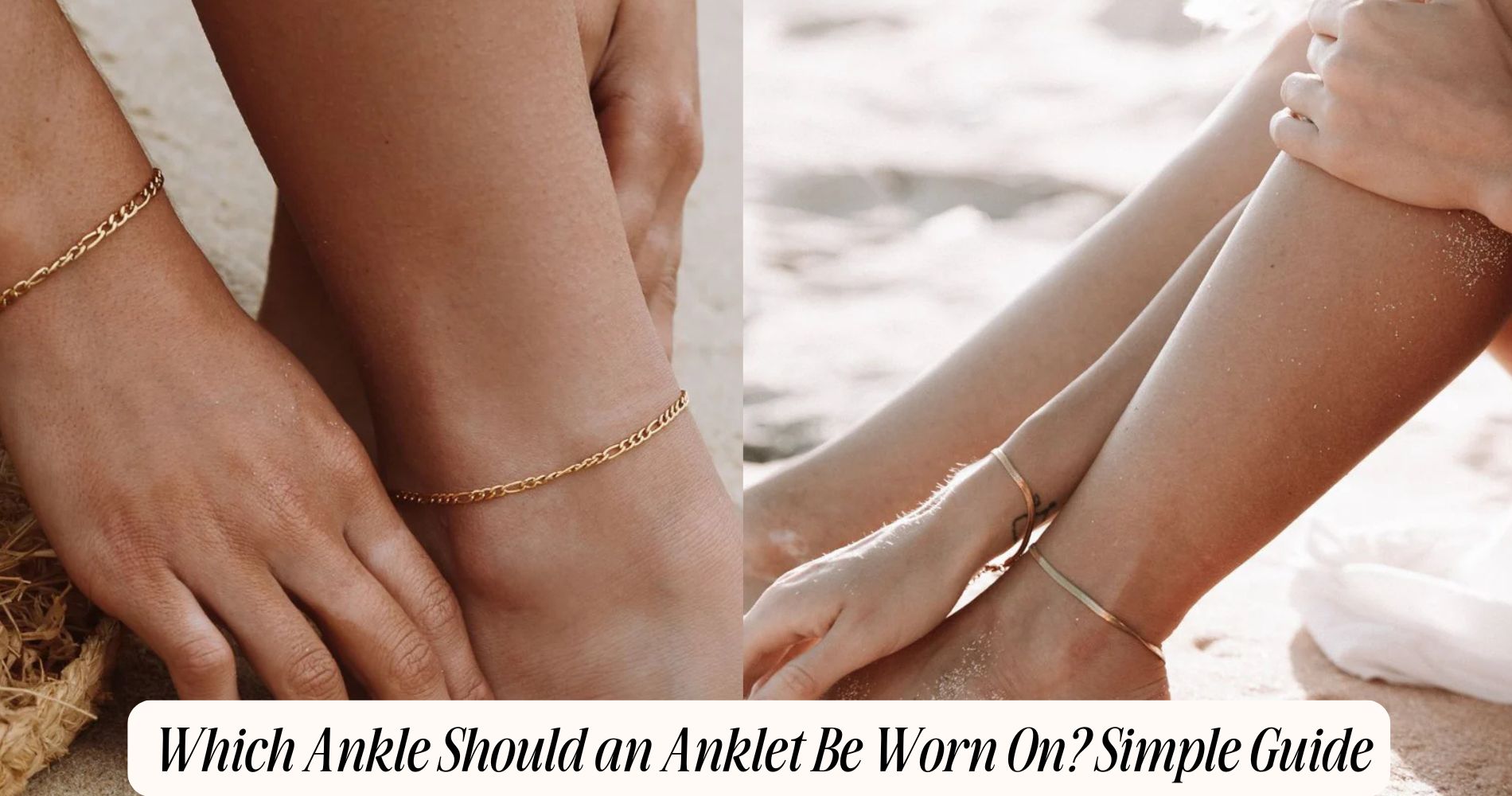
Picture a sleek gold chain glinting against a tan ankle or a stack of colorful beads catching the light as you walk. Those visuals say “fashion‑aware,” not “taken” or “single.”
Influencers mix metals, charms, and shells on either ankle purely for balance and aesthetics. Let your anklet placement follow your outfit, mood, or photo moment—not outdated myths about relationship status.
Comfort Considerations: Dominant Leg, Swelling, and Fit
Because style means nothing if it rubs your skin raw, think about comfort before you clip on that anklet.
Start by noticing your dominant leg. If you’re constantly flexing your right foot while driving or leading steps when you walk, that ankle may feel irritated faster, especially by chunkier chains or charms. Switch to the non‑dominant side if you hate the feeling of metal in motion.
Factor in swelling, too. Feet often puff up in heat, long flights, or late in the day. Choose adjustable closures or extender chains so the fit stays relaxed, not strangling.
Test your ankle flexibility: point, flex, and rotate. If the anklet digs in or catches, size up or move it slightly higher on the ankle.
Matching Anklets With Shoes and Outfits
Once your anklet fits comfortably, treat it like a styling tool, not an afterthought.
Think regarding anklet styles and shoe compatibility: delicate chains flatter minimalist sandals and ballet flats, while chunkier links balance sneakers or platform slides. With heels, especially strappy ones, choose a slim, gleaming anklet that echoes your hardware—gold with warm tones, silver with cool palettes.
Match metals to your jewelry and bag details so the eye travels smoothly from earrings to ankle.
For beachwear, woven or beaded anklets pair best with barefoot looks or easy flip-flops.
With tailoring or office outfits, keep it refined: one sleek anklet, low-contrast with your skin tone, peeking from cropped trousers or a precise midi hem.
Layering and Stacking Anklets on One or Both Ankles
When you start layering anklets, you’re building a mini composition around your ankles, not just piling on chains.
Think regarding contrast and rhythm: mix one delicate chain with a slightly heavier link, add one textured piece, then maybe a single charm anklet to catch the light. That’s how you create intentional layering styles, not clutter.
Decide whether you want one statement ankle or a mirrored look on both.
On one ankle, stack three to five pieces in varied lengths so they fall like tiers. On both ankles, keep the stacking techniques more restrained—two slim chains each, or one bold anklet echoed by a minimalist partner.
Always let one design lead visually, and let the others support it.
Tips for Wearing Anklets Confidently Anywhere
Though anklets still carry a laid‑back reputation, you can wear them in almost any setting if you style them with intent.
Treat anklet styling like you'd a bracelet: match the metal to your watch or rings, and echo one detail from your outfit—like a sharp blazer line or a silky slip skirt.
For the office, choose a single, slim chain that sits just above the shoe line; it should whisper, not shout.
On nights out, lean into confident accessorizing with bolder charms, mixed metals, or a delicate chain on each ankle.

At the beach or on vacation, experiment with shells, beads, and braided cords.
Whatever the setting, keep your anklet clean, untangled, and sitting comfortably—not spinning or digging into skin.
Frequently Asked Questions
Can Men Wear Anklets, and Does Ankle Placement Differ for Them?
Yes, you can definitely wear anklets; placement doesn’t differ for men. You choose left or right based on comfort, anklet styles, and cultural significance, then style it confidently with minimalist chains, leather bands, or beaded statement pieces.
Are There Any Anklet Placement Rules for Professional or Office Settings?
You generally avoid anklets in strict offices, but in relaxed workplaces you can wear minimalist anklet styles on one ankle only, matching metals to your professional attire, keeping them thin, silent, and barely visible when you stand.
How Do Different Anklet Materials Affect Long-Term Comfort and Skin Sensitivity?
Different anklet materials dramatically influence long‑term comfort and skin sensitivity. You’ll feel safest in hypoallergenic titanium or 14k gold, while nickel, rough plastics, and cheap plated metals often trigger redness, itching, and unphotogenic irritation during all‑day wear.
Is It Okay to Wear Anklets During Sports, Swimming, or Workouts?
Yes, you can—but choose sleek, snug styles in silicone, stainless, or cord. Prioritize anklet durability factors, avoid sharp charms, and remove pieces during high-impact moves to support ankle injury prevention and keep your aesthetic sharp, not risky.
Do Anklets Have Specific Meanings in Lgbtq+ Communities Based on Ankle Choice?
You won’t find a universal LGBTQ+ anklet symbolism based on ankle choice; meanings vary by local scenes. Instead, you highlight LGBTQ+ identity through bold materials, pride colors, layered chains, and curated, Instagram-ready ankle stacks that signal your vibe.
Conclusion
In the end, there’s no “wrong” ankle—just the one that feels right for you. Whether you’re signaling subtle meaning, framing a strappy heel, or stacking sparkling chains above clean white sneakers, let your anklet placement reflect your style, not rules. Pay attention to comfort, balance it with your outfit, and don’t be afraid to switch sides. When you wear your anklet with intention and confidence, it always looks effortlessly on-trend.







コメントを書く
このサイトはhCaptchaによって保護されており、hCaptchaプライバシーポリシーおよび利用規約が適用されます。