


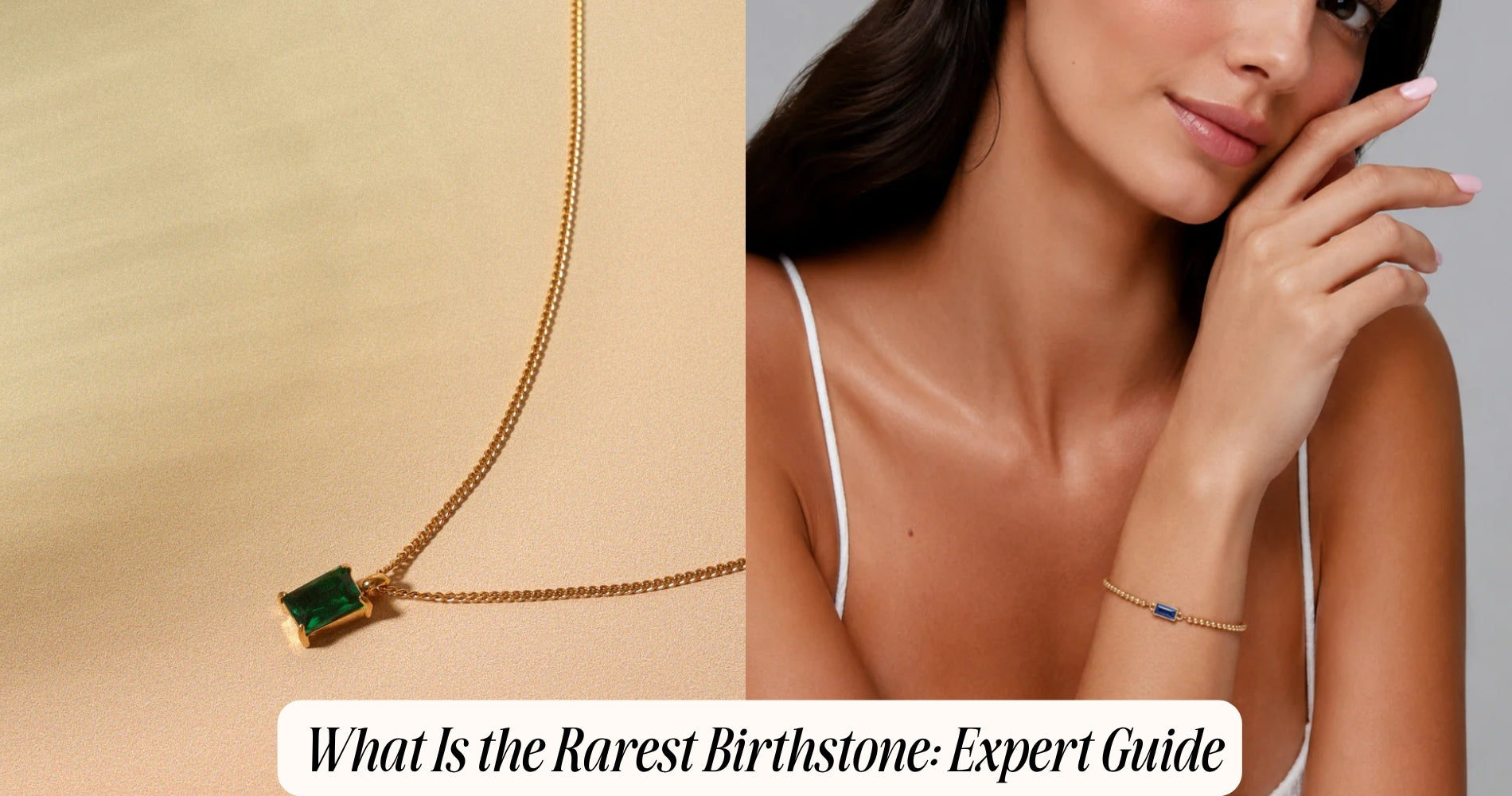
What Is the Rarest Birthstone: Expert Guide
Not all birthstones are equally available. Diamond, the April birthstone, is mined in dozens of countries and available at every price point. Alexandrite, the June alternate, changes color between daylight and incandescent light and is so scarce that most people have never seen a genuine specimen. What is the rarest birthstone depends on which definition of rarity you apply: geological scarcity, consistent high-quality production, or practical availability in the jewelry market. The Stone Collection draws on the full range of birthstones for wearable everyday pieces. This guide covers the rarest birthstones by multiple measures, what makes each one scarce, and what that rarity means if you are considering wearing or gifting one.
How Birthstone Rarity Is Measured
Rarity in gemstones is not a single measurement. It operates across several distinct dimensions that can produce very different rankings depending on which factor you weight most heavily.
Geological scarcity refers to how little of a mineral exists in the earth's crust or in economically mineable deposits. Some gemstones form only under extremely specific temperature, pressure, and chemical conditions that rarely converge in nature. Others require a precise combination of trace elements that simply does not occur in most geological environments. Geological scarcity is the deepest form of rarity because it cannot be addressed by finding new mines or improving extraction techniques.

Quality production rarity acknowledges that many minerals exist in abundance but only rarely produce gem-quality material. Topaz, for example, occurs in significant quantities globally but topaz of good color, clarity, and size suitable for fine jewelry is considerably rarer than raw topaz crystals. The gap between the total geological presence of a mineral and its availability as a quality gem is large for many birthstones.
Commercial availability is the most practical definition for buyers. A stone can be geologically rare but still widely available in jewelry because synthetic versions exist, because high-quality imitations substitute effectively, or because major deposits were found within the last century. Conversely, a stone can be geologically common but difficult to source in specific quality grades that the market demands.
Understanding these three dimensions explains why different sources give different answers to the rarest birthstone question.
What Is the Rarest Birthstone: The Leading Candidates
Alexandrite (June)
Alexandrite is the strongest case for the title of rarest birthstone and the one most consistently cited by gemologists. It is a variety of chrysoberyl that contains chromium as a trace element, and the specific chromium concentration required to produce alexandrite's distinctive color-change effect occurs in very few geological environments globally.
The defining property of alexandrite is its dramatic color change: it appears green to blue-green in daylight and red to purple-red under incandescent light. This effect, sometimes described as "emerald by day, ruby by night," requires chromium atoms that absorb specific wavelengths at exactly the balance point between red and green light transmission, which shifts in its apparent effect as the light source changes. The chemical coincidence required to produce this is genuinely unusual.

Original Alexandrite deposits in the Ural Mountains of Russia, discovered in the 1830s, are now essentially exhausted. Production continues from deposits in Sri Lanka, Brazil, India, and East Africa, but fine-quality alexandrite with strong color change is extraordinarily scarce. A fine natural alexandrite of 1 carat or more with vivid color change in both light sources commands prices in the tens of thousands of dollars per carat, placing it well above emerald and sapphire on a per-carat basis for comparable quality.
The vast majority of alexandrite sold in the consumer jewelry market is synthetic, produced through the Czochralski process or hydrothermal growth. Synthetic alexandrite is genuine chrysoberyl with the same chemical composition and the same color-change effect, but it is not rare. Identifying natural versus synthetic alexandrite requires laboratory testing. Most alexandrite in mass-market jewelry settings is synthetic.

Taaffeite (October alternate)
Taaffeite is not on any standard birthstone list but appears in discussions of gemstone rarity frequently enough to warrant mention. It is one of the rarest gemstones known, discovered when a gemologist in 1945 found a stone he believed was spinel that turned out to be a previously unknown mineral. Its scarcity is geological: it forms only through an unusual combination of beryllium, magnesium, and aluminum under specific metamorphic conditions. It has no official birthstone designation but is occasionally associated with October as an alternative to opal or tourmaline in certain gemological traditions.
Tanzanite (December)
Tanzanite is the most geographically restricted birthstone in the standard list. It occurs in only one location on Earth: a small area of roughly 14 square kilometers near Mount Kilimanjaro in Tanzania. No other commercially significant tanzanite deposit has been found anywhere else in the world despite decades of exploration.
Tanzanite is a variety of zoisite that contains vanadium impurities that produce its distinctive blue-violet color. Its geological rarity is specific: the combination of vanadium concentration, heat from the volcanic activity in the region, and the specific metamorphic conditions that produce gem-quality crystals occurs only in this single location. Some geologists estimate that commercially viable tanzanite reserves may be exhausted within the next two to three decades at current extraction rates.
The practical availability of tanzanite is currently reasonable because mining continues actively, but quality has declined as the most accessible deposits are worked out. Fine deep blue-violet tanzanite with strong trichroism (showing different colors from different viewing angles) is increasingly scarce in the better grades.

Red Diamond (April alternate)
Red diamonds are the rarest color variety of the most famous birthstone. While diamonds as a species are not particularly rare, naturally occurring red diamonds are. The red color in diamonds comes from a structural defect in the crystal lattice rather than from chemical impurities, which makes it an even more unusual formation requirement than trace-element-dependent colors. The Argyle mine in Western Australia, which produced most of the world's supply of red and pink diamonds, closed in 2020, further restricting supply.
True red diamonds of even 0.5 carats are extraordinarily rare and command auction prices that far exceed any other gemstone on a per-carat basis. They are not a practical consideration for everyday jewelry.
Alexandrite vs Tanzanite: A Comparison
| Stone | Month | Rarity Type | Price Per Carat (Fine Quality) | Availability |
|---|---|---|---|---|
| Alexandrite | June | Geological and quality | $5,000 to $50,000+ | Very limited natural; synthetic available |
| Tanzanite | December | Geographic restriction | $600 to $1,200 | Currently available; declining supply |
| Red diamond | April | Structural formation | $100,000+ per carat | Extremely rare, not practical |
| Fine opal (black) | October | Quality rarity | $1,000 to $15,000 | Limited; Lightning Ridge, Australia |
| Natural ruby (no heat) | July | Quality rarity | $3,000 to $30,000+ | Very limited |
Rarity Within Common Birthstones
Some birthstones are common as minerals but genuinely rare in the specific qualities the gem market values most. This quality rarity affects everyday buyers more directly than geological rarity.
Emerald: Emerald is the green variety of beryl and is widely mined, but fine emerald without significant inclusions and without heat treatment or oil enhancement is genuinely rare and commands prices that rival the finest sapphires and rubies. Most commercial emerald contains visible inclusions (called jardin, French for garden) that are tolerated in emerald at levels that would be unacceptable in other colored gemstones. A truly clean, vivid emerald of 2 carats or more is a rare object at any source.

Natural sapphire without heat treatment: The vast majority of blue sapphires sold commercially have been heat-treated to improve color and clarity. Untreated sapphires with fine color and clarity carry significant premiums, with certification from a recognized laboratory confirming the absence of treatment. A fine unheated Kashmir sapphire of 3 carats or more is among the rarest and most valuable gems in the standard birthstone list.
Paraiba tourmaline: Tourmaline is the October birthstone alongside opal. Standard tourmaline is widely available and affordable. Paraiba tourmaline, a neon blue-green variety containing copper and manganese from Paraiba state in Brazil, is genuinely scarce. Original Brazilian material commands prices of $5,000 to $20,000 per carat for fine quality.
What Rarity Means for Wearing a Birthstone
For most jewelry buyers, extreme geological rarity like alexandrite or tanzanite creates a practical question: is the piece worth wearing regularly or is it better suited to occasional wear given its replacement cost?
Very rare and valuable stones are typically worn in protected settings (bezels or protective prong arrangements) and removed before sports, swimming, and heavy-contact activities. The setting metal matters for how well the stone is protected: a securely designed setting in a durable base metal keeps a precious stone safer through regular wear than a delicate prong setting in a soft metal.
For stones of moderate rarity and strong personal meaning, daily wear in a secure setting is entirely practical. Tanzanite, tourmaline, and garnet all suit daily jewelry wear when set appropriately for their hardness. Tanzanite at Mohs 6 to 7 benefits from protective settings for rings in particular; earrings and pendants are lower-risk applications for this stone.

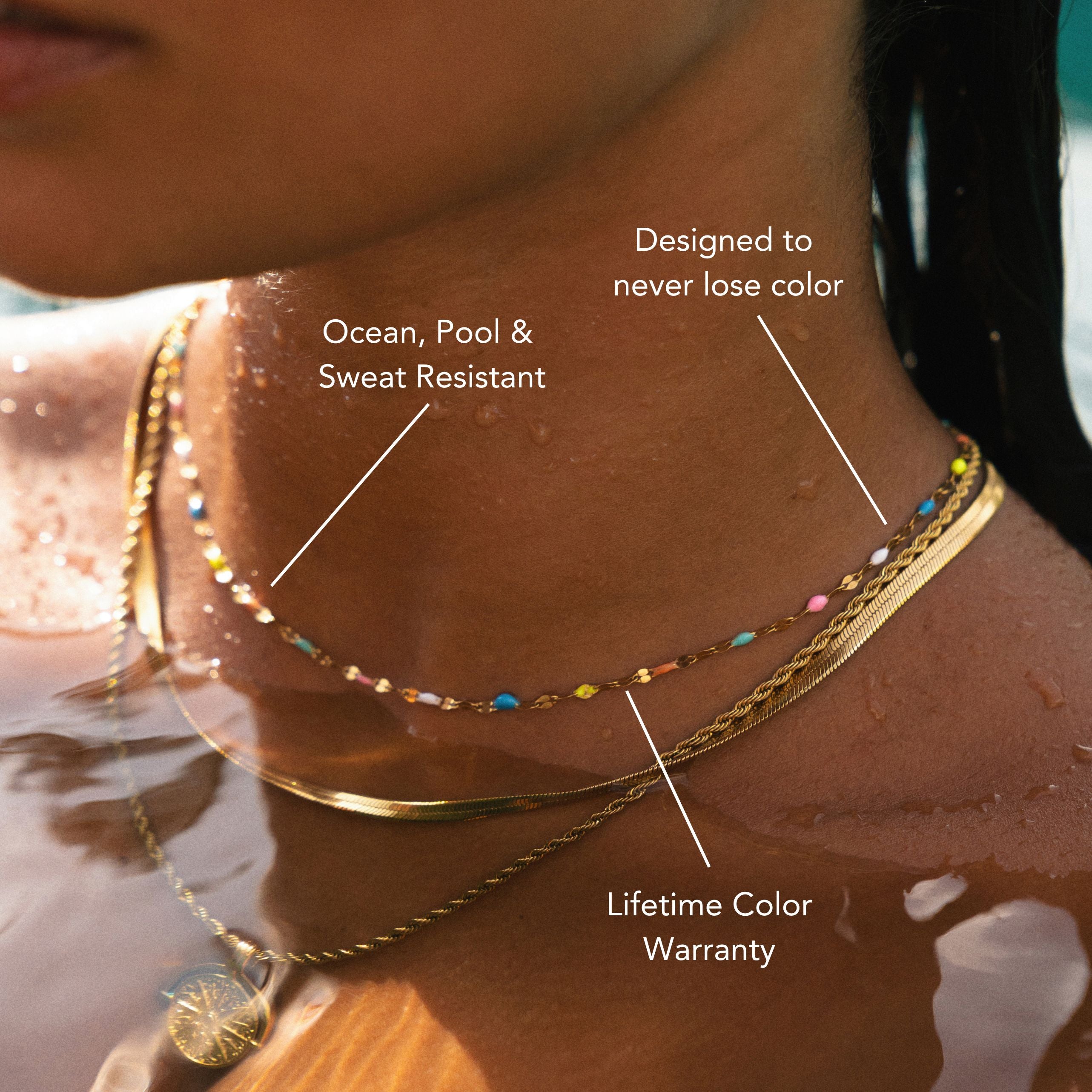
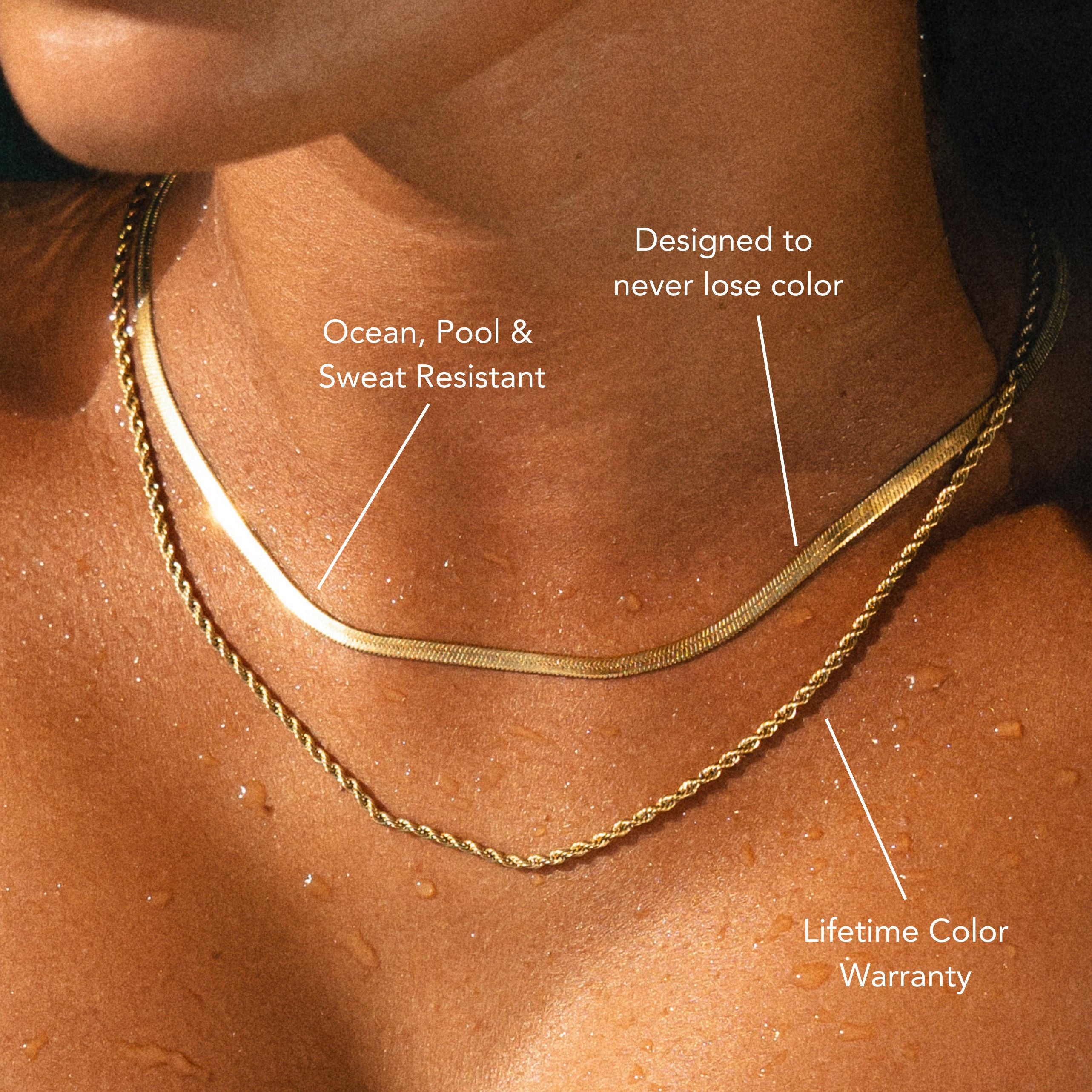
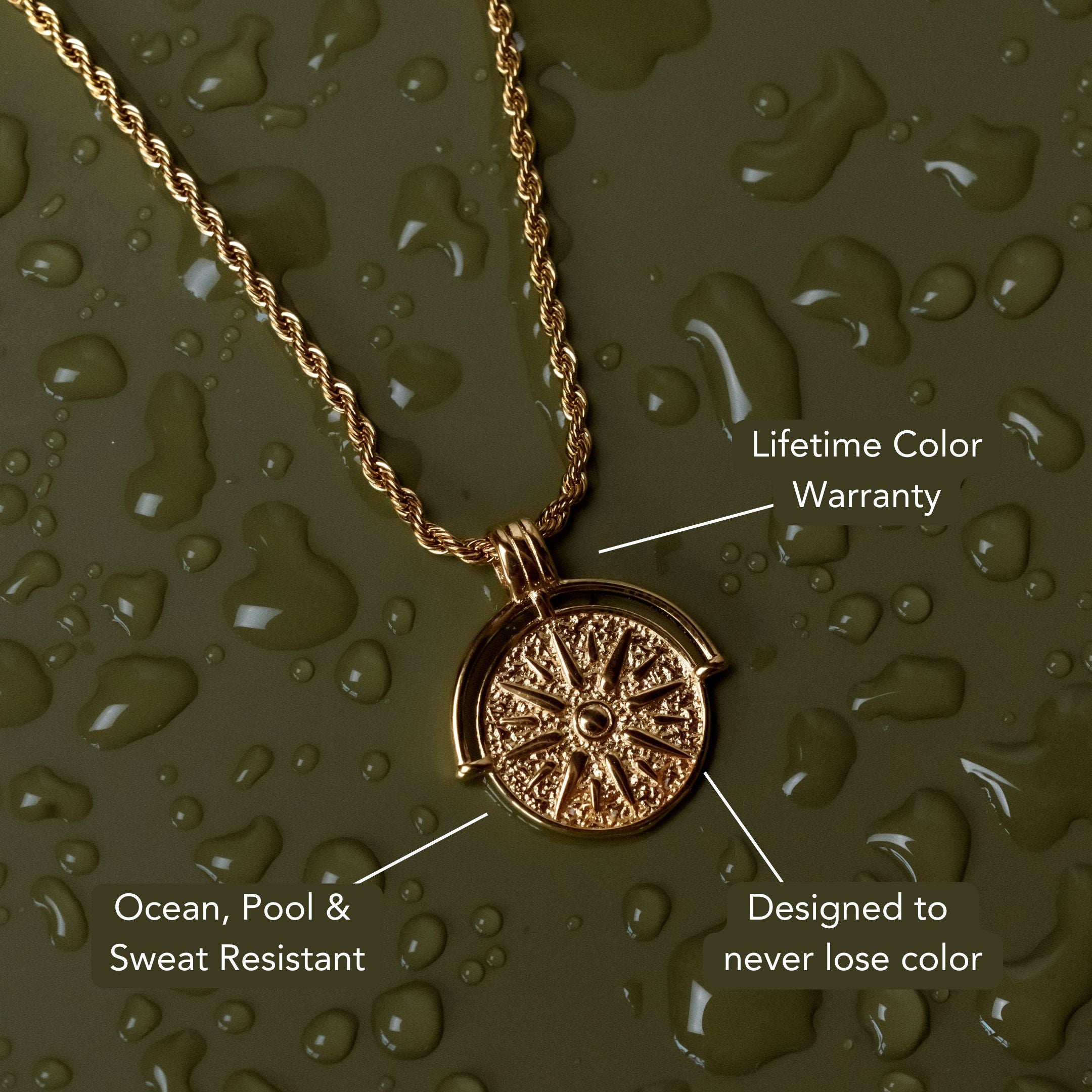
For zodiac and birthstone pieces worn through active daily life including beach days, gym sessions, and ocean contact, the setting material holds the stone's context as consistently as the stone holds its meaning. PVD-coated stainless steel settings maintain their appearance through water and friction without tarnishing around the stone, which ensures both the metal and the stone remain visually consistent through sustained active wear. ATOLEA's stone collection applies that waterproof construction to birthstone and zodiac stone pieces, with a lifetime color warranty on every piece's metal elements.
Frequently Asked Questions
What is the rarest birthstone overall?
Alexandrite, the June birthstone, is most consistently identified as the rarest birthstone in the standard list. Fine natural alexandrite with strong color change in both daylight and incandescent light is extraordinarily scarce, with original Russian deposits exhausted and current global production extremely limited. It commands the highest per-carat prices of any standard birthstone for fine quality material.
Is tanzanite rarer than diamond?
By geological measure, high-quality tanzanite is significantly rarer than diamond. Tanzanite occurs in a single location on Earth spanning roughly 14 square kilometers. Diamonds are mined across dozens of countries on multiple continents. The diamond market's perception of scarcity is substantially maintained through production control rather than geological limitation. Fine tanzanite from the single Tanzanian deposit is genuinely geologically restricted in a way that diamonds are not.
What makes alexandrite so rare?
Alexandrite requires chromium in a very specific concentration within chrysoberyl crystal, at a precise balance point between red and green light absorption that produces the color-change effect. This specific chemical combination occurs in very few geological environments globally. The Ural Mountain deposits that produced the original finest material are exhausted. Current production from other sources exists but fine-quality material with strong color change is extremely limited.
Which birthstones are easy to find?
Diamond (April), garnet (January), amethyst (February), blue topaz (December alternate), and peridot (August) are among the most commercially available birthstones. All are mined in multiple countries, available at a wide range of price points, and produced in sufficient quantity that fine quality specimens are accessible without the scarcity premium that affects alexandrite or tanzanite.
Can rare birthstones be worn every day?
It depends on the stone's hardness and the replacement cost tolerance of the wearer. Tanzanite at Mohs 6 to 7 suits earrings and pendants for daily wear but benefits from protective settings in rings. Alexandrite at Mohs 8.5 is durable enough for daily wear in most applications. The practical concern with genuinely rare stones is replacement cost if the stone is lost or damaged rather than durability per se.
Rarity in Context
What is the rarest birthstone is most clearly answered by alexandrite: a stone so chemically specific in its formation requirements and so exhausted in its best historical sources that fine natural material is genuinely extraordinary. Tanzanite follows closely with its single-location restriction. Within common birthstones, quality rarity for untreated sapphire, paraiba tourmaline, and fine emerald creates scarcity that affects buyers as directly as geological rarity does for less common stones. For most everyday jewelry purposes, the rarity that matters most is finding the stone that resonates personally, which is a different kind of scarcity entirely.







コメントを書く
このサイトはhCaptchaによって保護されており、hCaptchaプライバシーポリシーおよび利用規約が適用されます。